Employability, social impact reshape global university rankings – The Korea Times
- Published Sep 16, 2026 3:53 PM KST
Korean schools weigh global benchmarks against push to build distinctive strengths
Global university rankings are looking beyond traditional measures of academic excellence, placing greater emphasis on how universities prepare students for a changing job market and contribute to society as artificial intelligence (AI) reshapes workplaces
But emerging and regional universities still face the challenge of balancing performance on common ranking criteria with efforts to develop and showcase their distinctive strengths
Representatives of Quacquarelli Symonds (QS) and Times Higher Education (THE) pointed to a broader shift in how university performance is measured, with QS placing greater emphasis on graduate employability and THE highlighting universities’ sustainability and wider social impact
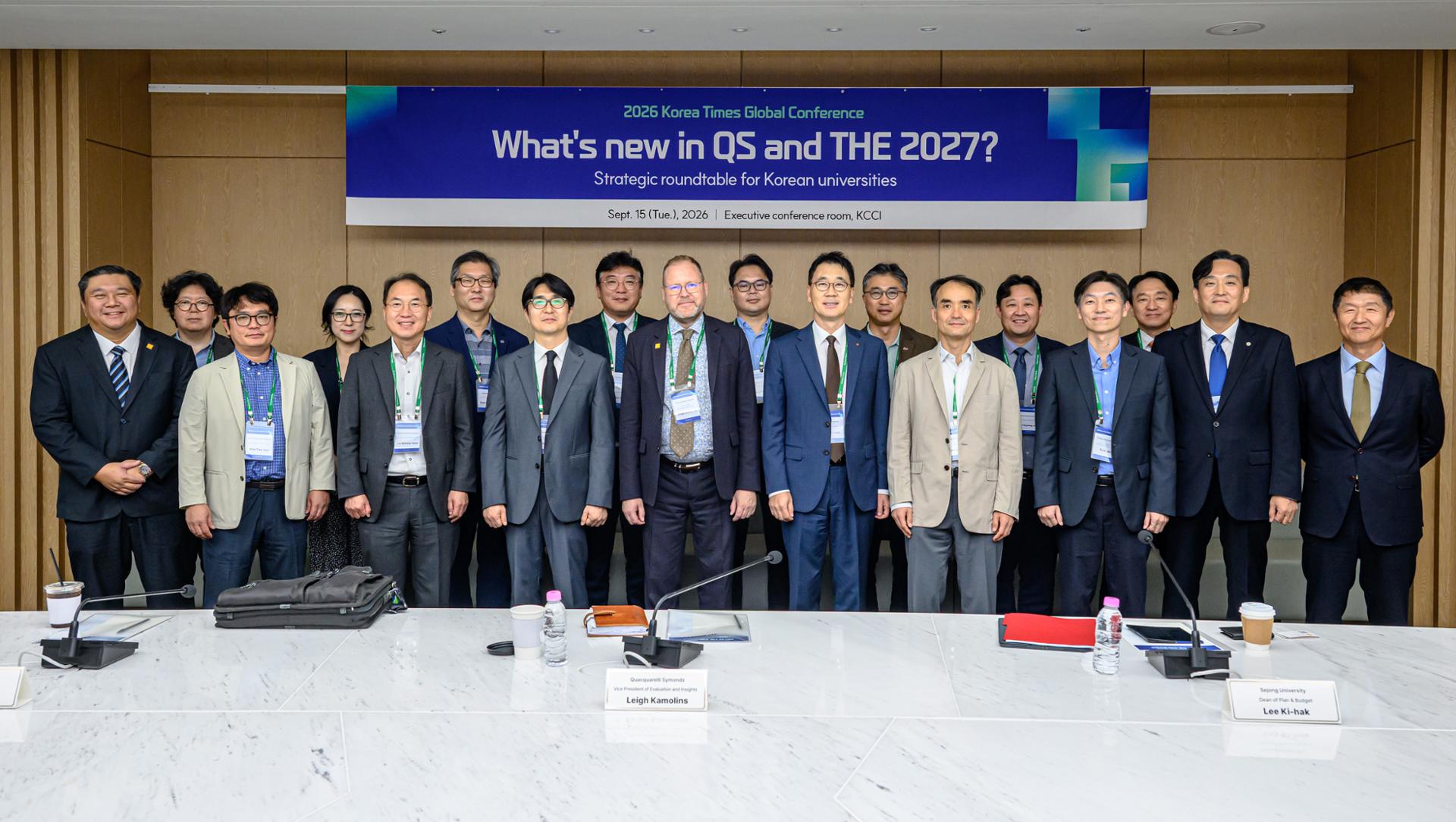
The two global ranking organizations outlined the changes during special sessions held following the 2026 Korea Times Global Conference, while also assessing the strengths and weaknesses of Korean universities
QS identified employability as a growing focus in global rankings. It currently accounts for 20 percent of the QS World University Rankings, but the organization is exploring more sophisticated measures of graduate employment, alumni impact and how closely graduates’ careers align with skills gained in university
Leigh Kamolins, vice president of evaluation and insights at QS, said the organization is analyzing some 500 million job postings and data on tens of millions of alumni to better track employer demand and graduates’ career paths
“What we measure in rankings needs to evolve to reflect the changing nature of employment,” he said
The shift could open new opportunities for Korean universities, which have strong reputations among employers. But QS data showed that nearly every Korean institution performs better in employer reputation than in actual graduate outcomes, underscoring the need to turn that recognition into tangible career results
“There’s a lot of opportunity for Korean universities to expand their global presence, as only about a quarter are currently ranked by QS,” said Samuel Ang, regional director for Asia at QS
Meanwhile, THE is broadening how it measures universities’ impact, with a growing focus on sustainability and their contributions to society
While its World University Rankings remain centered on research excellence, THE revamped its methodology in 2023 to better capture research quality, knowledge transfer and internationalization. The changes included a new measure tracking how often university research is cited in patents, highlighting its impact beyond academia
At the same time, THE’s Sustainability Impact Ratings look beyond academic performance to assess how universities contribute to society and their communities, based on the U.N. Sustainable Development Goals
“Universities have long been measured by their academic excellence and research, but the question is what impact they are actually having on their communities,” said Ashley Mok, vice president for consultancy in the Asia-Pacific region at THE
Korean universities stood out in patents, research income and industry income but international collaboration remained a weak spot, particularly in international co-authorship
“Internationally co-authored papers tend to be cited two, three, four or even five times more than domestically authored papers,” said Mei Mei Lim, APAC region president of THE, adding that such collaboration can also help strengthen universities’ global academic reputation
The discussions also highlighted a dilemma facing emerging and regional universities as they seek to build distinctive strengths while competing under global ranking criteria largely designed to assess institutions on a common scale
Representatives of Korean universities pointed out that rapid improvements in research, education and industry collaboration do not always translate quickly into global recognition, while distinctive institutional or regional contributions can be difficult to capture through conventional metrics
Both QS and THE acknowledged the limitations of existing metrics and said their methodologies will continue to evolve as universities take on changing roles in rapidly changing era shaped by AI, demographic shifts and other global challenges
Need help choosing the right university or study destination?
Start your FREE JIUniversity Admission Assessment today and discover the best international study pathway for your academic goals.
Source: www.koreatimes.co.kr
Tag:employability, Global, impact, reshape, social