Australia moves to reduce net migration with new restrictions on student family members and “visa hopping”
Short on time? Here are the highlights:
- The Australian government has announced a goal of bringing net migration down to 225,000 from its current 292,000
- International student reforms will play a role in achieving that target
- Of several new rules that will apply to the sector, perhaps the most notable is that the dependants of most international students will no longer be permitted to bring their family members with them while they study
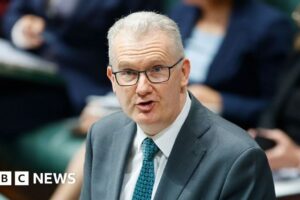
In a speech at the National Press Club on 17 September, Australian Home Affairs and Immigration Minister Tony Burke announced a package of new reforms that will affect incoming and current international students
The new rules will:
- “Restrict secondary applicants on most student visas.” In other words, as in the UK, the families of most international students, including graduate students, will no longer be permitted to come with them while they study in Australia. The exceptions are to be PhD, Pacific or ASEAN, and overseas government-sponsored students. “Anyone who already has their family attached to a visa and is already here, we’re not going to be breaking up families onshore,” said Minister Burke. “The ones who are already here, that’ll stay as is for the, you know, until at whatever point they leave Australia, unless they end up being entitled to a permanent visa. But we will no longer be adding to the stock of students automatically being able to bring family members over.”
- Require students wanting to switch provider or course to apply for a new student visa (with exceptions for students in extenuating circumstances).
- Limit students who want to continue their studies in Australia to those who progress to a more advanced qualification (e.g., bachelor’s to master’s). The Minister explains: “One of the classic areas of visa hopping is people finish a course, hop to the next course, hop to the next, and one of the worst examples is they transfer down to a not-so-legitimate educational provider who is able to say to them, ‘Study with me, it’ll cost you less’, and where this is being used effectively to drive a migration outcome, not an educational outcome. What we’ll be doing is setting a very simple rule: You can go up the qualification scale, but only up the qualification scale…But to hop around up and down to different institutions and claim that what is actually just seeking a migration outcome as part of Australia’s export of international education will come to an end as a model.”
- Attach a “no further stay” condition to visitor visas “to ensure they are only used by genuine visitors and not as a pathway to extending a stay in Australia.” This would include students on short (three months or less) English-language (ELICOS) courses or short university or vocational (VET) courses.
- Changing the Working Holiday Maker Program to “introduce a ballot system for years two and three where there will be a regional work requirement in support of regional Australia.”
Of the restriction on secondary visa applicants, Keri Ramirez, managing director of Studymove, noted that the rule will affect South Asian students in particular:
“South Asian countries accounted for more than 70% of all dependent visas granted last financial year offshore, with 10,448 visas granted to student dependents from Nepal, Bangladesh, Bhutan, India and Sri Lanka.”
Between July 2025 and June 2026, Australia granted 337,400 student visas, 46,000 of which were for dependants
Industry response to the new rules is mixed, with general consensus that introducing measures to reduce visa-hopping is fair but that the dependants ban will prevent many genuine students from choosing Australia. Associations representing research institutions with PhD-heavy enrolments welcomed the provision that PhD students will still be permitted to bring their families with them
IEAA CEO Phil Honeywood, said:
“There will be a number of genuine student cohorts who will now look to study in countries other than Australia as a result of this migration policy. Students from key source markets understandably prefer to bring their partner with them if they are going to be away from their home country for three to four years. While the exemption for PhD and overseas Government-sponsored students is important, we will definitely lose talented young people as a result of today’s announcement.”
Further, Mr Honeywood pointed out the effect of the government’s relentless changing of migration settings:
“The cumulative effect of our world-record-high student visa charges and constant restrictive policy announcements is that Australia is rapidly losing its reputation as a global study destination of choice. Ironically, other nations such as France, Germany, Ireland and New Zealand have recognised that we are in an international competition for skills and are actively recruiting students who would normally apply to Australia.”
Group of Eight Chief Executive Vicki Thomson said:
“By providing exceptions for families of international PhD students seeking to study in Australia, the Government has recognised that not all international students are the same, and that high-quality PhD students are essential to Australia’s research capability, skills pipeline, and long-term economic strength.”
In his speech, Minister Burke announced that the government’s intention is to use reforms to bring net overseas migration (NOM) from the current level of 292,000 to 245,000 in the 2026/27 financial year and to 225,000 in 2027/28
The international education reforms dovetail with those targets – especially the restriction on secondary applicants. Students who bring their families with them tend to be more likely to want to stay in Australia over the long term than those who don’t
As in Canada, new international student enrolments are coming in below the level planned by government. Universities Australia Chief Executive Officer Luke Sheehy said:
“The government has decided that 225,000 is the migration level Australia needs and that 295,000 new international student commencements is a sustainable level within that broader approach
“But international student commencements are already tracking below the planning level – down 8% on last year – while universities are operating with a $2,500 student visa charge, slow visa processing and other barriers making Australia harder to choose
“If Australia consistently falls short of the 295,000 students the government says it can sustainably accommodate, we also fall short of the skills, workers and economic contribution those students bring
“You can’t set a sustainable level with one hand and make it harder to get there with the other
“If 295,000 is the right level for Australia, the settings need to give universities a realistic chance of getting there.”
For additional background, please see:
- “Australia poised to further restrict immigration in bid to drive down net migration figures”
- “Australia: Decline in international higher education commencements projected for 2026”
- “Australia: As visa applications from foreign students fall, the government has set the national target for new international students in 2027”
Most Recent
- Australia moves to reduce net migration with new restrictions on student family members and “visa hopping”
- How can we tell the story of international education?
- UK: August’s sponsored study visa applications drop to lowest level since 2022
Most Popular
- Which countries will contribute the most to global student mobility in 2030?
- Research shows link between study abroad and poverty alleviation
- Beyond the Big Four: How demand for study abroad is shifting to destinations in Asia and Europe
Need help choosing the right university or study destination?
Start your FREE JIUniversity Admission Assessment today and discover the best international study pathway for your academic goals.
Source: monitor.icef.com
Tag:Australia, migration, moves, reduce, restrictions