
EV load management could save Europe €10.6bn, study finds
Home/Library
/EV load management could save Europe €10.6bn, study finds
Jonathan Spencer JonesPosted on: 21 September 2026
A new study on European EV growth estimates that intelligent load management can avoid €10.6 billion in grid investments between now and 2030
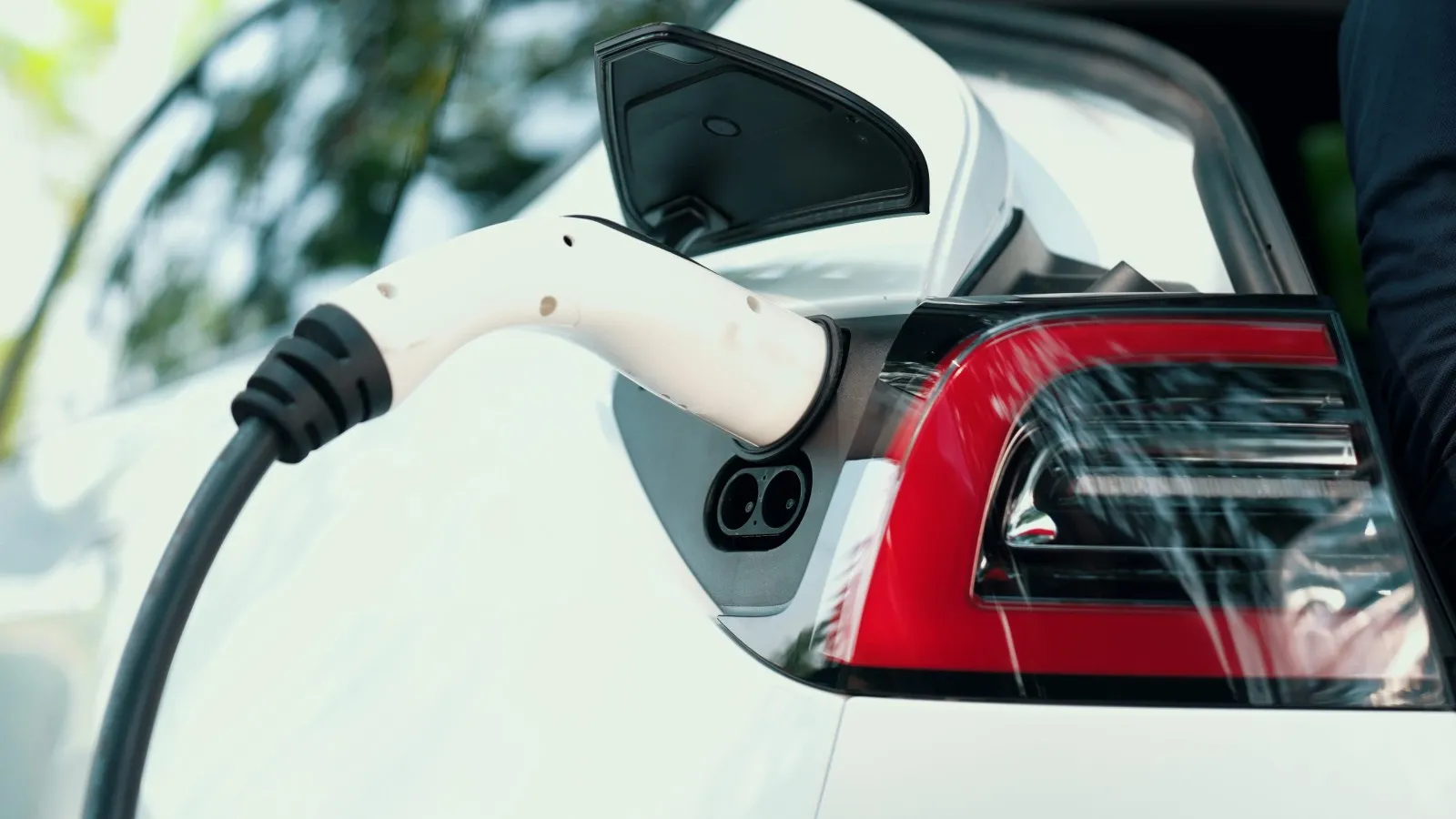
EV charging / Image: 123RF
The new study for EIT Urban Mobility, ChargeUp Europe and ACEA by Siemens finds that around €24.7 billion in electricity distribution grid investment would be required by 2030 to accommodate the projected EV growth
However, deploying intelligent EV load management could reduce this investment need to around €14.1 billion, avoiding €10.6 billion in investment
Dr Adriana Diaz, innovation director at EIT Urban Mobility, said that scaling electric mobility is not solely a matter of increasing the number of EVs on the road or expanding charging infrastructure
“Charging deployment must respond to local mobility patterns and develop alongside grid capacity, making smarter use of existing networks while directing investment where it is most needed. Europe needs a coordinated approach across mobility, energy and technology so that the transition can happen faster, more fairly and at lower cost.”
Also of interestFinnish EV pilot shows flexibility can ease grid strainAustria hits 300,000 EV milestone as e-mobility surges
The study, based on an analysis of 64 urban centres across Europe using the Siemens ramp-up model, projects that EV numbers will grow 3.8 times by 2030 and that every centre will require grid reinforcement to accommodate this growth
The biggest pressure is on the LV grid, with over three-quarters of the physical grid reinforcement needed at this level driven primarily by residential EV charging
The EV growth and consequent grid investment requirements are found to vary significantly across Europe, with Central Europe accounting for the largest share of investment needs – almost two-thirds – followed by the Nordic countries, Eastern Europe and Southern Europe
However, the fastest growth is expected in Eastern Europe – with EV numbers increasing almost fivefold due to fleet ramp-up. This is also where load management could make the biggest difference, yielding an average savings of 48% and reaching as much as 53% in Croatia
Without action, the study estimates that one in 10 of every kilometre of Europe’s grid would fail under EV load by 2030
Lucie Mattera, secretary general at ChargeUp Europe, stresses that the picture is dual
“Grid upgrades are an absolute prerequisite for EV uptake and charging deployment at scale; simultaneously, there is very significant cost-saving potential from grid digitalisation and load management to keep grid investment needs at a lower level.”
The study identifies two barriers to achieving the potential €10.6 billion savings – operational and economic
Of five countries sampled – Germany, Netherlands, Norway, Poland and Italy – only Germany has in place all four of the smart charging building blocks, which are controllable consumer devices, smart meters, a digitalisation strategy and capex/opex incentives for utilities
However, despite Germany’s regulatory lead, the smart meter rollout remains limited and operational activation is a bottleneck in the five
Under the revenue cap regulation, physical assets get funded, but software, such as EV load management doesn’t, despite being the cost-optimal solution, it may not be financially
Highlighting that all the legislative elements of an EU framework are already in place, the study proposes a three-phase roadmap for achieving smart charging and grid flexibility at scale by 2035
In the next two years, the recommendation is to activate what the law already requires, which is to operationalise smart charging, make the grids visible with mandated measurement infrastructure deployment and fund grid investment
Between 2028 and 2030, the regulatory and market architecture should be built by closing the interface gaps and publishing market design rules. The plan for post-2030 is to maximise full system value by unlocking system flexibility and incentivising load management
Sigrid de Vries, director general at ACEA, concludes the study shows smarter charging can significantly reduce the required investment – but only if there is a move from smart charging capability on paper to solutions that actually work in practice
“Europe now needs targeted grid investment, greater visibility of local capacity and the right market framework to unlock the flexibility that electric vehicles can offer.”
From energy storage to prosumers and interconnection – stay across the latest news, companies and projects driving a more flexible energy system.
Explore the Flexibility hub
V2GE-mobilitygrid load management
Share:
+2
+1
+1
+2
V2GE-mobilitygrid load management
And get access to all content
+4
EMC ElektroMobilitätsClub Director Christian Peter shares his take on the potential of V2G in Austria, where interest has been high
- Yusuf Latief
- 19/11/2025
+2
Here are 10 key ways the e-mobility sector was able to grow in 2025
- Yusuf Latief
- 29/12/2025
+3
Tesla is expanding its delivery of electric vehicles into Southern Cone countries Uruguay and Argentina as demand grows in the region
- Jonathan Spencer Jones
- 10/08/2026
All articles
+1
Smart state of charge management helps BESS overcome finite capacity, enabling reliable balancing services, writes Sebastian Steinlechner
- Guest/partner contributor
- 19/09/2026
+3
Through collaboration, interoperability frameworks and practical toolkits, CEI-Sphere is accelerating resilient, flexible energy systems in Europe
- Guest/partner contributor
- 18/09/2026
+4
Emerald AI, Google and Nvidia launched an alliance to advance flexible AI data centres and optimise their demand on the US power grid
- Jonathan Spencer Jones
- 18/09/2026
Need help choosing the right university or study destination?
Start your FREE JIUniversity Admission Assessment today and discover the best international study pathway for your academic goals.
Source: www.enlit.world
Tag:could, Europe, load, Management, save

You may also like