France’s Anti-waste and Circular Economy Law

France’s Anti-waste and Circular Economy Law
Published on12 September 2022
Policy
English
- español
- português
Part of a series of case studies that exemplify elements of theUniversal Circular Economy Policy Goals(2021) in practice
France is shaping a system-wide transition towards a circular economy with an ambitious law that has introduced several measures that are a world first
A wasteful system
In 2016 France generated considerable waste – amounting to 4,6 tonnes of waste per inhabitant. Large quantities of such post-consumer waste are barely looped back into the system, fall through the cracks of the waste management system, and end up causing environmental damage and threatening biodiversity. Of the estimated 4.5 million tonnes of plastic waste generated in 2016 in France, 80,000 tonnes ended up polluting the natural environment, and 10,000 tonnes entered the Mediterranean sea. This led to the biggest plastic pollution in the Mediterranean region that year coming from France.
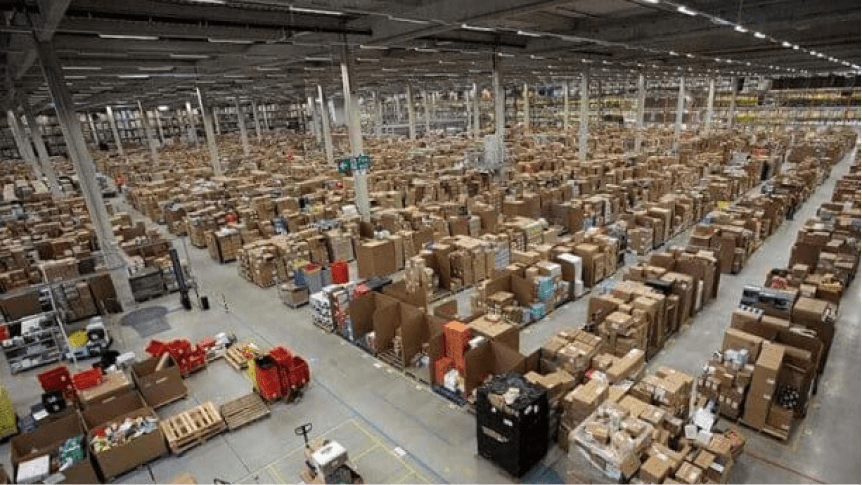
Not only that, large quantities of post-consumer waste are mismanaged and products and materials are wasted before being used even once. Every year, EUR 630 million worth of unsold products are destroyed in France. When perfectly good products are unnecessarily destroyed, it is also the energy and resources used to produce these goods that are wasted. The destruction of unsold goods generates 5 to 20 times more GHG emissions than reusereuseThe repeated use of a product or component for its intended purpose without significant modification..
Unnecessary waste is an economic and social issue
With rising costs of living and 9.3 million people living in poverty in France, unnecessary waste is increasingly seen as both an economic and a social issue. For instance, nearly EUR 180 million worth of unsold hygiene and beauty products are destroyed annually in France. Yet, 3 million French people are regularly deprived of basic hygiene products, and charities that support vulnerable people regularly face chronic shortages of these goods of first necessity.
A law for system change
To tackle these environmental and social issues, France adopted its comprehensive Anti-waste Law in 2020. The law aims to eliminate waste and pollution from the design stage and transform the system of production, distribution, and consumption from a linear to a circular economic model. It encourages businesses across various sectors, municipalities, and citizens to eliminate waste and adopt more circular practices. The law aims to:
-
phase out single-use plastic packaging by 2040;
-
eliminate waste by encouraging reuse and supporting charitable organisations;
-
tackle planned obsolescence;
-
promote a better reaterials; and
-
provide better and more transparent information to consumers
Source: Ministry of the Ecological Transition
Policy measures that are a world first
The law has introduced a large number of measures, some of which are a world first, to shape the transition to a circular economycircular economyA systems solution framework that tackles global challenges like climate change, biodiversity loss, waste, and pollution. It is based on three principles, driven by design: eliminate waste and pollution, circulate products and materials (at their highest value), and regenerate nature.. France is the first country to ban the destruction of unsold non-food products. Rather than landfill or incinerate unsold goods, companies will now have to reuse, donate or recyclerecycleTransform a product or component into its basic materials or substances and reprocessing them into new materials. their unsold products.
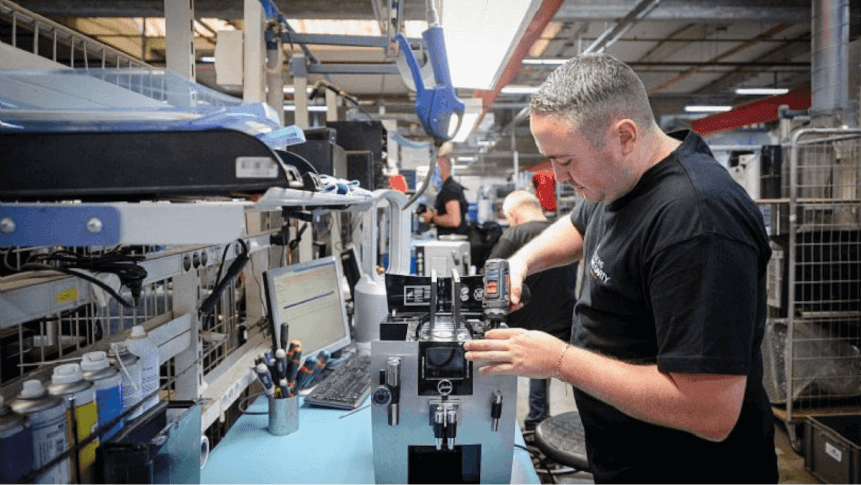
It is also the first country to introduce a mandatory repairabilityrepairabilityThe ease with which a product or component can be repaired. index on electronic and electric products, such as smartphones, laptops, washing machines, and televisions. This measure aims to increase the proportion of products that get repaired, by making manufacturers consider repairability at the design stage and consumers aware of repairrepairOperation by which a faulty or broken product or component is returned back to a usable state to fulfil its intended use. options when purchasing a device.
The law also aims to stimulate societal transformation, by creating new jobs and supporting the solidarity economy. By creating funds to foster the creation of 70,000 jobs in reuse networks and encouraging the donation of unsold goods to charitable organisations, France is also promoting circular solutions to support people living in precarious conditions
Illustrating the Universal Circular Economy Policy Goals
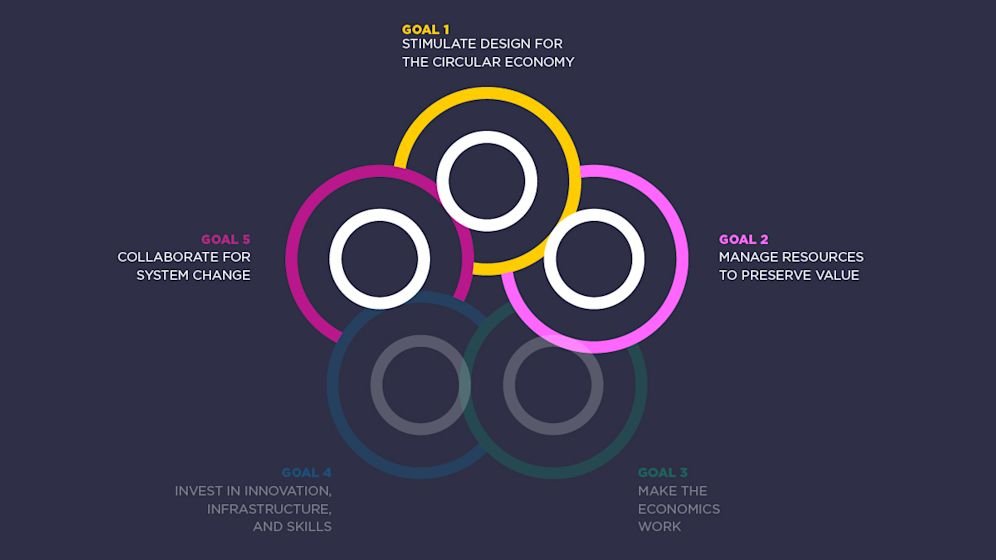
Part of a series of case studies that exemplify elements of the Universal Circular Economy Policy Goals (2021) in practice
Download
France’s Anti-waste and Circular Economy Lawis available in: English, Español, Français, Português, 中文
Other case studies in this series

Case study
Andhra Pradesh Community-managed Natural Farming programme
Training farmers in regenerative food production in India
- Policy
- Food

Case study
EU’s Innovation Deal for a circular economy
Innovators and policymakers collaborate to identify circular solutions for EV batteries
- Policy

Case study
France’s Anti-waste and Circular Economy Law
France is shaping a system-wide transition towards a circular economy with an ambitious law
- Policy

Case study
Japan’s disclosure and engagement guidance
Facilitating the transition to a circular economy through finance
- Policy
- Finance

Case study
China’s policies to advance vehicle remanufacturing
Targeted subsidies, industrial zones and funding are propelling the vehicle remanufacturing sector
- Policy

Case study
Chile’s Circular Economy Roadmap
Collaboration for a shared action plan towards a circular Chile by 2040
- Policy
- Climate
You may also like

Publication
Universal circular economy policy goals
A framework for national governments, cities and businesses to accelerate the transition para uma
- Policy
- Cities
- Business

Video
Five universal policy goals to enable a circular economy at scale
Streamed on 2nd February 2021
- Policy
Publication
The circular economy: a transformative Covid-19 recovery strategy
This paper demonstrates how policymakers can pave the way to a low carbon, prosperous future
- Policy
- Business
- Cities

Collection
Government and policy case studies
Examples of circular economy in policies
- Policy
Activating policy for a circular economy
Policymakers can create the enabling conditions for the circular economy to outcompete linear
- Policy
- Policy
The Ellen MacArthur Foundation
Click to subscribe
The Ellen MacArthur Foundation works to accelerate the transition to a circular economy. We develop and promote the idea of a circular economy, and work with business, academia, policymakers, and institutions to mobilise systems solutions at scale, globally
Charity Registration No. (England and Wales): 1130306
OSCR Registration No. (Scotland): SC043120
Company No.: 6897785
Ellen MacArthur Foundation ANBI RSIN (Netherlands): 8257 45 925
About usOur networkCareersContact usMedia centre
Follow us
The work of the Ellen MacArthur Foundation is supported by our Strategic Partners and Partners
Follow us
© Ellen MacArthur Foundation
Powered by ContentfulPoliciesCookies
Need help choosing the right university or study destination?
Start your FREE JIUniversity Admission Assessment today and discover the best international study pathway for your academic goals.
Source: www.ellenmacarthurfoundation.org