Sungkyunkwan, Yonsei, Unist named top semiconductor universities in JoongAng Rankings
Sungkyunkwan University (SKKU), Yonsei University and Ulsan National Institute of Science and Technology (Unist) were listed as the country’s top semiconductor universities in the JoongAng University Rankings 2026
The rankings evaluated 31 universities nationwide with specialized semiconductor education and research programs for the inaugural category. Most universities prioritized building students’ research capabilities through collaborations with companies that allow them to tackle industry challenges
SKKU, Yonsei and Unist were recognized as “exceptional” universities, placing in the top 10 percent, while Korea University’s Seoul Campus, Seoul National University (SNU), Hanyang University’s Seoul Campus, Daegu Gyeongbuk Institute of Science & Technology (DGIST), KAIST and Pohang University of Science and Technology (Postech) were named “excellent” universities, ranking in the top 30 percent.
Industry-linked research
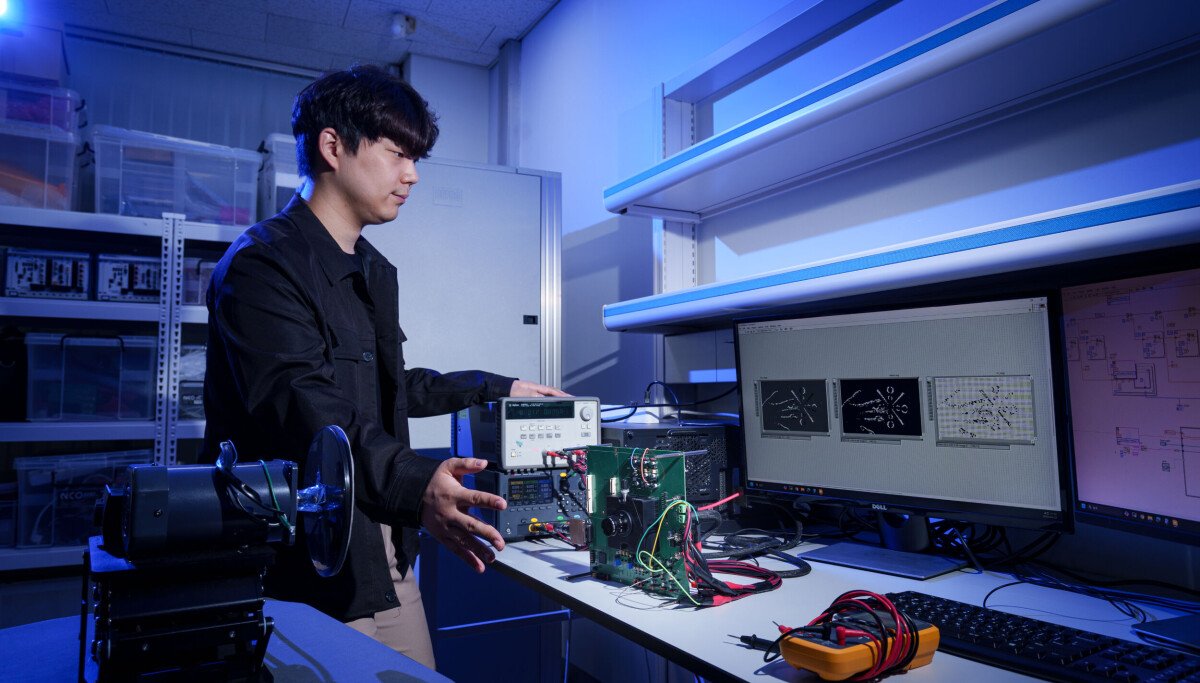
At SKKU, a research team led by Prof. Kim Jung-rae of the Department of Semiconductor Systems Engineering developed technology that reduces the storage space needed to correct data errors by about 33 percent in high bandwidth memory, or HBM, which is used in AI servers
In June, the team won the Best Paper Award at the International Symposium on Computer Architecture, a leading conference on computer architecture. This marked the first time that a Korean university received the honor
“New challenges emerge first in […] rapidly changing sectors such as semiconductors,” Prof. Kim said. “If universities and companies work together from the start to define any problems, they can solve them ahead of other [teams].”
SKKU launched Korea’s first semiconductor contract department — those created through contracts with companies and designed to train students for specific jobs or industries — with Samsung Electronics in 2006. It published 2,983 semiconductor papers from 2021 through 2024, and companies co-authored 355 of those, the highest number among the universities evaluated.
In November last year, the university established its Research Institute for AI Semiconductor Engineering and received 11 billion won ($8.2 million) in government funding for the next five and a half years to conduct joint research with four companies, including Samsung Electronics
Research quality
Unist stood out when it came to research quality
Its Field-Weighted Citation Impact (FWCI) — a measure of how often a paper is cited relative to the global average for articles in the same field and with the same publication year — stood at 1.77, or 77 percent above the world average
The university also produced 310 papers ranked in the top 10 percent most cited worldwide from 2021 through 2024, the most among the universities evaluated. Of those, 75 ranked in the top 2 percent
A research team led by Prof. Jeong Chang-wook of Unist’s Graduate School of Semiconductor Materials and Devices Engineering uncovered the mechanisms that form defects in oxide semiconductors used in smartphones and TVs. The findings were published in the Journal of the American Chemical Society in June
Unist’s nanofabrication facility, established when the university opened in 2009, is shared by more than 60 institutions nationwide and handles around 33,000 research processes annually
In March, Unist opened its Quantum-Nano FAB Center, a roughly 30 billion won facility equipped with dedicated quantum processors
Yonsei University’s Sinchon Campus also scored highly, posting an FWCI of 1.69, or 69 percent above the global average. Of its 2,063 papers published from 2021 through 2024, 455 ranked among the top 10 percent most cited worldwide, placing it third among the universities evaluated
Government funding
SNU received the largest amount of government funding for semiconductor-related research and development projects, securing about 55 billion won from 2023 through 2025
With support from the Ministry of Science and ICT, a research team led by Prof. Choi Woo-young of SNU’s Department of Electrical and Computer Engineering developed a technology to stack memory devices within the space used for semiconductor interconnects. This increases durability fivefold while allowing the use of existing wiring processes, reducing additional costs
The research was featured on the cover of the December 2024 issue of Electron Device Letters, a peer-reviewed scientific journal under the Institute of Electrical and Electronics Engineers. It was also named in the Ministry of Education’s list of 100 outstanding national research and development (R&D) achievements last year
KAIST ranked second in government funding, securing about 46 billion won during the same period
A research team led by endowed Prof. Choi Shin-hyun of the School of Electrical Engineering and Prof. Yoon Young-gyu of the Department of Semiconductor Systems Engineering developed an AI chip that can distinguish moving objects in videos from the background and, most importantly, compensate for errors caused by devices’ performance differences on its own. The findings were published in Nature Electronics in January last year.
Preparing industry-ready graduates
KAIST also ranked first in a survey of semiconductor talent preferences among corporate recruiters, followed by Postech and SNU
KAIST and Postech operate semiconductor contract departments with Samsung Electronics and incorporate company internships and field training into their regular curricula
Kim Yong-seok, an endowed professor at Gachon University’s College of Semiconductor, stressed the need to shift university curricula from theory-based learning to hands-on training
“There’s a clear difference between making semiconductors yourself and simply running simulations,” he said
“Students need experience building them, testing them and correcting errors.”
He added that universities should help students gain workplace experience through internships and similar programs, easing the burden on companies to train new hires
How the rankings were compiled
The semiconductor rankings evaluated 31 universities across four categories and eight indicators for a total of 60 points: research performance (40 points), government R&D project performance (10 points), educational conditions (5 points) and reputation (5 points)
Research performance was assessed using papers published from 2021 through 2024, including FWCI, the proportion of international and industry-academia collaborative papers and the share of publications ranked in the top 2 percent and top 10 percent most cited worldwide
Government semiconductor R&D funding was calculated by aggregating relevant projects disclosed through the University Financial Information Disclosure System operated by the Korea Advancing Schools Foundation from 2023 to 2025. Educational conditions were assessed based on industry-linked contract departments and designation as a specialized semiconductor university, and reputation reflected corporate recruiters’ preferences for graduates.
Need help choosing the right university or study destination?
Start your FREE JIUniversity Admission Assessment today and discover the best international study pathway for your academic goals.
Source: www.koreajoongangdaily.com
Tag:Named, semiconductor, Sungkyunkwan, Unist, Yonsei