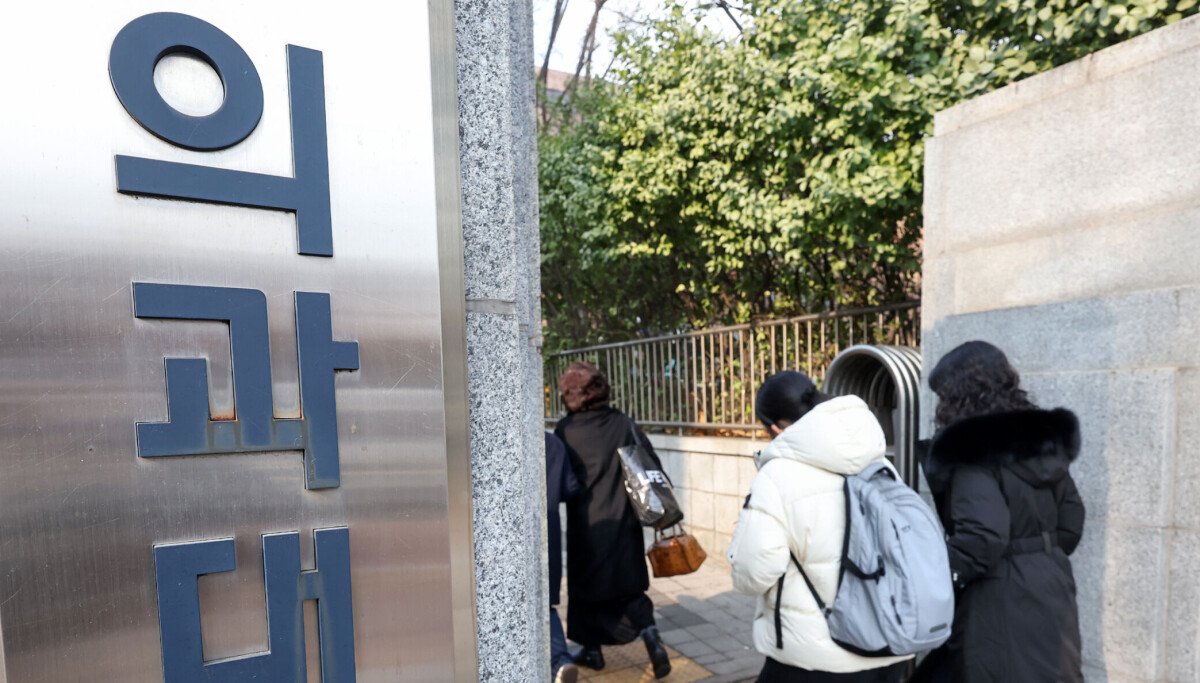
Fewer top-ranked students go all-in on medical schools in early university admissions cycle
Despite an overall increase in Korea’s medical school admissions quota, high school students with the best grades in science-related subjects are shifting their goal from entering medical school to attending universities with <a href="https://ji<a href="https://jiuniversity.com/afghan-women-with-uk-university-offers-heartbroken-after-visas-stopped/” title=”Afghan women with UK university offers 'heartbroken' after visas stopped”>university.com/sungkyunkwan-yonsei-unist-named-top-semiconductor-universities-in-joongang-rankings/” title=”Sungkyunkwan, Yonsei, Unist named top semiconductor universities in JoongAng Rankings”>semiconductor programs to become chipmakers rather than doctors
Among students with top-tier grades in science-related subjects — or those in rank 1 on Korea’s nine-level relative grading system — 87.5 percent applied to at least one medical school this year, down 2.3 percentage points from the previous year, according to an analysis released by university admissions consulting firm Jinhak on Wednesday
The data came from high schoolers who used the company’s website to apply to universities and voluntarily disclosed which schools they applied to in the early admissions cycle for the 2027 academic year
The average number of medical school applications per student who applied to at least one medical school fell on year from 4.49 to 4.27
Medical schools accounted for 67.1 percent of all early admission applications submitted by such students, down 6.5 percentage points from the previous year
While nearly nine out of 10 of these high schoolers still apply to medical schools, they are now less inclined to devote most of their early admission applications — generally capped at six — to them
Instead, they are also applying to semiconductor degree programs that offer employment opportunities upon graduation through partnerships with companies
A total of 16.3 percent of high schoolers with top-tier grades in the sciences applied to such programs this year, more than doubling from 7.3 percent the previous year
These programs also accounted for 4.1 percent of total applications, up from 1.7 percent the previous year
Applications to other science programs, excluding medical and pharmaceutical ones, also increased
The proportion of students applying to science-related majors rose 10.9 percentage points on year from 25.2 percent to 36.1 percent, and their share of total applications increased from 10 percent to 16 percent
Jinhak attributed the shift partly to a reduction in the number of applicants that medical schools will admit through the general early admission track. While the overall medical school quota increased for the 2027 academic year, most of that space was allocated to a newly introduced admission track aimed at training doctors to serve regional communities
“Given that medical schools will admit fewer students through regular admissions this year than last year, the shift toward a broader range of majors among top-performing applicants in the early admissions cycle may carry over into the regular admissions cycle,” Woo Yeon-cheol, the head of Jinhak’s admissions strategy research institute, said
Need help choosing the right university or study destination?
Start your FREE JIUniversity Admission Assessment today and discover the best international study pathway for your academic goals.
Source: www.koreajoongangdaily.com

You may also like

When even hairpins become suspect in college entrance exams