Federal Judge Casts Doubt on Government’s National Security Case for Four-Year Student Visa Limit | The Harvard Crimson
NewsFederal Judge Casts Doubt on Government’s National Security Case for Four-Year Student Visa Limit
By Sebastian B. Connolly and Summer E. Rose, Crimson Staff Writers
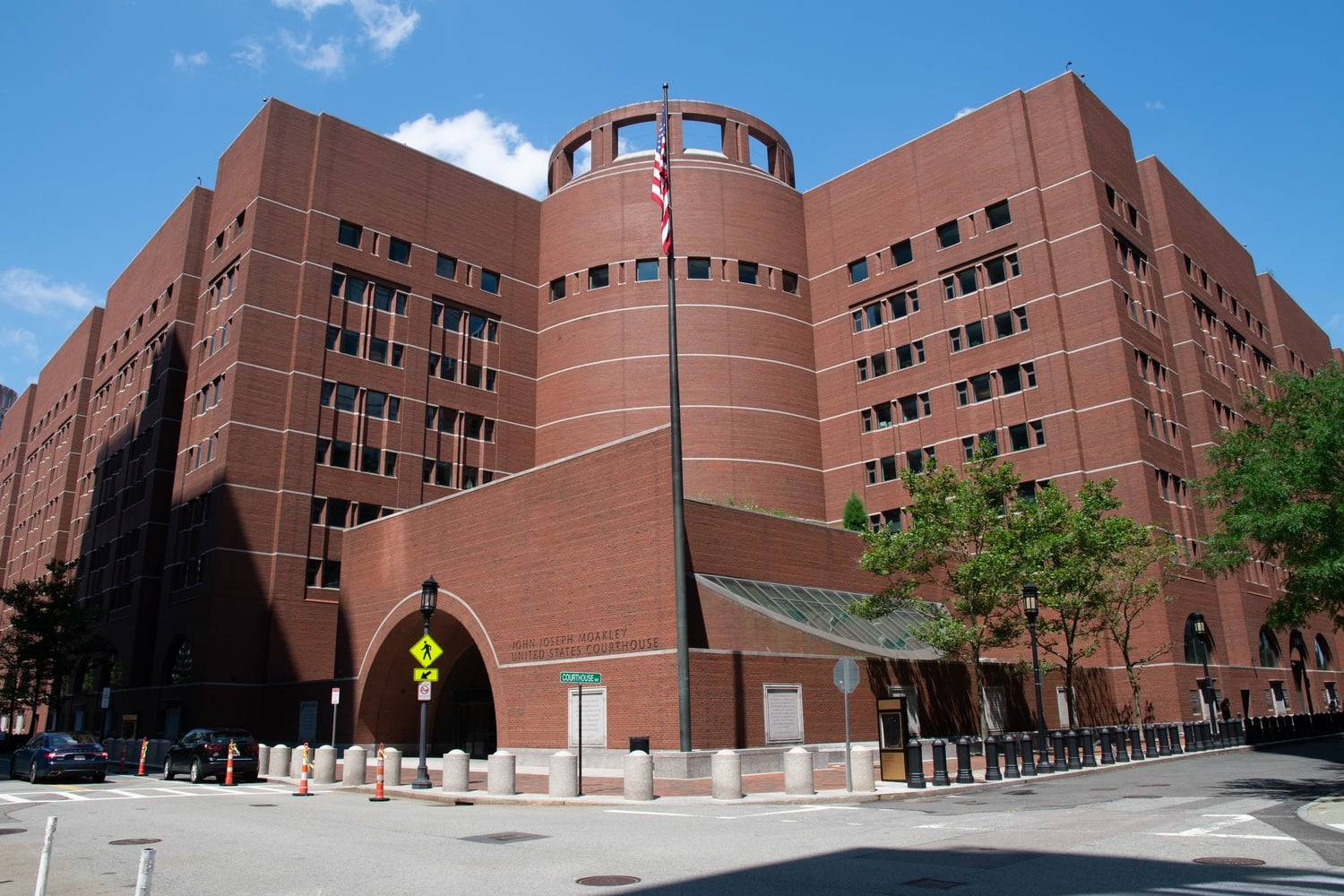
A federal judge appeared skeptical Thursday of the federal government’s national security justification for a new rule capping student visas at four years, as lawyers for a coalition of universities and labor unions pressed him to block the policy less than two weeks before it takes effect
U.S. District Judge F. Dennis Saylor IV declined to rule immediately on the coalition’s motion for a preliminary injunction or summary judgement — but left open the possibility of a temporary restraining order that would give him time to decide past Sept. 15, when the rule is set to go into effect
Saylor pressed government lawyer Michael A. Celone on the Department of Homeland Security’s contention — first made when the rule was announced — that the overhaul was necessary to prevent fraud and protect national security. He said he was “struggling to see any rational connection” between the rule and the government’s stated security concerns
The judge also questioned the economic impact of the rule and the 32-day window the government allowed for public comment, describing the timeline as “barely legal.” The government received tens of thousands of responses during that period, many of them critical
The rule would replace a longstanding system under which student visas remained valid as long as their holders kept their student status. In its place, it imposes a four-year limit, requiring students who need more time to file for an extension with the federal government rather than through their universities. It would also bar graduate students from changing their programs of study and prevent students from consecutively pursuing multiple degrees at the same educational level.
The suit was brought by the Presidents’ Alliance on Higher Education and Immigration — an organization that includes Harvard President Alan M. Garber ’76 — and seven other plaintiffs. Among them are the Association of Independent Colleges and Universities in Massachusetts, a lobbying group that counts Harvard as a member, and the United Auto Workers, the parent union of the Harvard Graduate Students Union.
Advertisement
The Harvard International Office wrote in a July email to international affiliates that the change is expected to have a “significant impact” on the <a href="https://ji<a href="https://jiuniversity.com/university-of-waterloo-waterloo-ranked-the-top-canadian-university-for-producing-entrepreneurs/” title=”University of Waterloo – Waterloo ranked the top Canadian university for producing entrepreneurs”>university.com/mumbai-it-graduate-awarded-fully-funded-university-of-sydney-scholarship/” title=”Mumbai IT graduate awarded fully funded University of Sydney Scholarship”>University’s international community
Get The Crimson in your inbox
Paul W. Hughes III, lawyer for the plaintiffs, argued in opening remarks that an injunction was warranted because the government was likely to lose the case under the Administrative Procedure Act, which bars federal agencies from “arbitrary and capricious” action
“When it changes policy in an area that is so consequential, it is absolutely critical that the government abide by the Administrative Procedure Act,” Hughes said. “The agency failed in our view at every turn.”
Hughes said the rule would depress international enrollment, force changes to existing degree programs, and shift the burden of administering the cap onto universities — harms he argued were both immediate and irreversible. He also called the government’s cost-benefit analysis flawed and said the rule would functionally take many degrees off the table for international students
Celone countered that the rule was designed not as a strict time limit but as a means of ensuring regular check-ins between visa holders and the federal government
“It’s merely an administrative checkpoint after four years,” Celone said. He added that his clients had described the change as a renewal, likening it to checking out library books again — before acknowledging that the metaphor was not “entirely apt.”
“International students aren’t library books,” Abbie LeBlanc, an international Ph.D. student from Canada and an HGSU general member, said in an interview after the hearing. “We shouldn’t have to renew our status in this way.”
Advertisement
Spokespeople for the government have previously argued that the four-year rule is needed to stop misuse of the student visa system
“It was a substantive hearing, and we’re certainly looking forward to the judge’s ruling,” Miriam Feldblum, CEO of the Presidents’ Alliance, said in a separate post-hearing interview. “I think the hearing underscored the irreparable harm that students and institutions face under this rule.”
Saylor told the lawyers after the proceedings that his “fervent hope” was to reach a ruling before the rule’s effective date
—Staff writer Sebastian B. Connolly can be reached at [email protected] or on Signal at sbc.23. Follow him on X @SebastianC4784
—Staff writer Summer E. Rose can be reached at [email protected] or on Signal at ser.85. Follow her on X @summerellenrose
Want to keep up with breaking news?Subscribe to our email newsletter
Have a tip for The Crimson?Share it confidentially
See more on:College, International Students, Lawsuits
Need help choosing the right university or study destination?
Start your FREE JIUniversity Admission Assessment today and discover the best international study pathway for your academic goals.
Source: www.thecrimson.com
Tag:Casts, Doubt, Federal, Governments, Judge