Struggling to get around the Berkshires? Williams student researchers want to hear from you
WILLIAMSTOWN — The chance to gain real-world research experience drew Williams College senior Puzant Kiwanian to a countywide survey examining transportation insecurity in the Berkshires
As he spoke with residents and gathered data, the statistics and philosophy major came to understand how a lack of reliable transportation affects nearly every aspect of daily life
He hails from Los Angeles, where he said it seems like “everyone has a car and everything is spread out.” Berkshire County is more rural, and car-less residents can find themselves isolated.
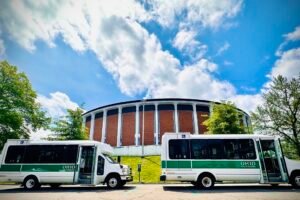
“People have to miss health appointments because they don’t own a personal vehicle and rely on some sort of public transportation or some sort of shuttle that isn’t always the most reliable,” Kiwanian said
Kiwanian is one of about a half-dozen Williams students working with the Berkshire Regional Planning Commission and the college’s Center for Learning in Action on the Berkshire Transportation Access Project. It’s a survey that aims to help researchers understand how residents experience transportation barriers and use that information to identify solutions.
With hard numbers in hand to illustrate the problem, the Berkshire Regional Transit Authority could make the case for more funding from the state, said Paula Consolini, director of the Center for Learning in Action
Measuring transportation insecurity
The students are running the survey through August to reflect seasonal fluctuations. It is based on the Transportation Security Index — a six-question tool developed at the University of Michigan to measure transportation insecurity
Questions about demographics, vehicle access and socioeconomic status will help the Williams College student researchers identify which groups lack reliable transportation the most. Responses are anonymous, and parents can answer questions on behalf of children under 18
Initial results and student-supported analysis are expected this winter, with in-depth interviews beginning around January
Consolini and Alison LaRocca, founder and lead consultant at Luminary Evaluations, a Dalton-based planning and evaluation firm, are leading the Williams students on the project
The project has received more than 150 responses so far, with a goal of 500 to 1,000. Currently, survey participants skew toward North County, said LaRocca, so the team is working on getting more participants from Central and South County
More than 24 community partners, including Berkshire Community College and Massachusetts College of Liberal Arts, are helping distribute the survey
Destiny Charron, Luminary’s executive assistant, said her experience as a tutor at Berkshire Community College gave her firsthand insight into how transportation barriers affect students
“What I noticed over and over again were these roadblocks … and the biggest one was transportation,” she said.
Buses could be canceled or late, leaving students without another way to get to class or tutoring, while taxi rides to the college were expensive, she said
Turning responses into action
Consolini and LaRocca started designing the survey with students last summer on a “shoestring budget” and launched it with the help of a $64,000 state grant.
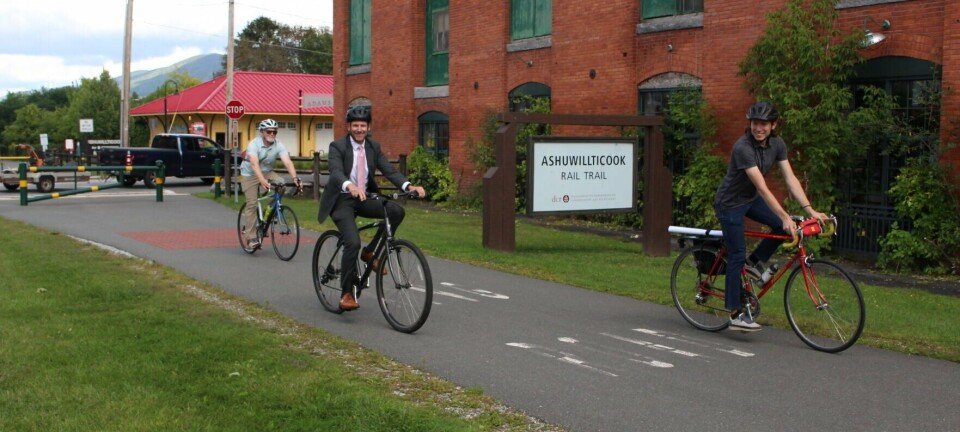
Regional leaders, including BRPC Executive Director Laura Brennan, said the survey could help make the region more competitive for transportation funding, including construction of the next planned 9 miles of the Ashuwillticook Rail Trail and other projects involving the BRTA and the ongoing West-East Rail project
“It gives people a collective voice to be able to say what their experience is, and for folks to be able to absorb that information and use it for decision-making,” LaRocca said
While some students are tabling at community events and working with partners to distribute the survey, others, including Kawanian, are focused on analyzing the data. He meets monthly with LaRocca and Consolini to review responses, discuss how to analyze them and see how he can connect the work to his courses
The $130 million toward upgrading Springfield as a Western Massachusetts train hub likely represents the last push from the 2021 Infrastructure Investment and Jobs Act in support of this important project
Kiwanian said the project also showed him the challenges of reaching the people most affected by transportation insecurity
“I gained a lot of insight into how to reflect the needs of the community and make the decisions necessary to accomplish the arduous goal of reaching voices that are difficult to hear,” he said. “The people who experience the most transportation insecurity are going to be harder to reach.”
One challenge, he said, is that the survey cannot produce a statistically representative sample of Berkshire County residents, since researchers are relying on community outreach rather than randomly selecting participants
“We pivoted from that to trying to just gain the most amount of voices,” Kiwanian said, adding that those responses can still help inform policymakers and funders.
For Kiwanian, navigating the survey’s limitations has brought his statistics and philosophy studies into the conversation — giving him a chance to apply what he’s learning in the classroom to the practical and ethical questions involved in conducting community research
“I’m motivated by the ‘why’ questions, not just, like, let’s get answers, but how are we getting the answers,” he said, “and how are we making sure that they’re good answers.”
Need help choosing the right university or study destination?
Start your FREE JIUniversity Admission Assessment today and discover the best international study pathway for your academic goals.
Source: www.berkshireeagle.com
Tag:around, Berkshires, struggling, Student, Williams