Trump’s $70,000 Student Visa Fee Sparks Fears of Further Decline in International Enrollment
Getty Images/Brendan SMIALOWSKI / AFP
The Trump administration’s proposed $70,000 fee for international students seeking temporary work permission after graduation is raising concerns that fewer foreign students will choose to study in the United States. University leaders warn that the plan could make American colleges less attractive, weaken school budgets, and reduce the number of skilled workers available to U.S. employers
The proposal comes as international enrollment is already falling. The number of new international students at U.S. colleges and universities dropped by 15% in fall 2026 compared with the previous year, according to the Institute of International Education. That decline followed an 18% drop in fall 2025
The Department of Homeland Security (DHS) announced the proposed fee in October. It would require colleges and universities to pay at least $70,000 for each international student who takes part in Optional Practical Training (OPT), a program that allows eligible foreign graduates to work temporarily in the United States in jobs related to their studies
The administration has also proposed an additional $30,000 charge for graduates in science, technology, engineering, and mathematics (STEM) who seek an extension of their work permission
Although the fees would be charged to schools, university leaders fear that colleges may pass some or all of the costs to students. That could put work opportunities beyond the reach of many international graduates, including those who have already spent years paying tuition and living expenses in the United States
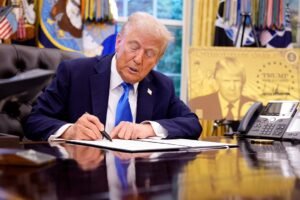
The proposal is part of a wider effort by President Donald Trump to tighten immigration rules. His administration has also targeted skilled-worker visas and proposed changes that could make it harder for foreign workers to remain in the country after losing their jobs
Federal officials say the policies are intended to protect American workers and prevent companies from using foreign workers to replace U.S. employees. However, universities and business groups argue that international students help fill jobs that require special skills and support the country’s economy
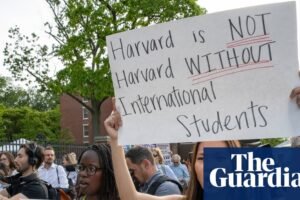
The growing number of restrictions has also made some prospective students question whether the United States is still a safe and practical place to study and build a career
“In the beginning of the administration, they were taking a hammer to everything and really shocking the system,” said Daniel Delgado, a former senior Department of Homeland Security official who now works at the Searchlight Institute. “Now we’re seeing them translate that into policy.”
U.S. Visa Crackdown Drives Student Enrollment Decline
The proposed OPT fee adds to concerns among colleges that the United States is losing its appeal as a destination for international students
More than 1.1 million international students attended U.S. colleges and universities during the 2023–2024 school year, setting a record at the time. But enrollment has since fallen as students face new visa rules, delays, and uncertainty about whether they can work in the country after graduation
The decline is not the same at every school. Indiana University in Bloomington reported that its international student population fell 15%, from 4,428 in fall 2025 to 3,768 in fall 2026, TheGuardian reported
Cleveland State University experienced a much larger drop. Its international enrollment fell 46%, from 1,542 students in fall 2025 to 828 this fall
Provost Nigamanth Sridhar said problems obtaining student visas played a major role in the decline at Cleveland State. He estimated that the university lost between $2 million and $4 million because fewer international students enrolled
International students often pay higher tuition than students from the United States. Their payments help colleges support academic programs, pay staff, and cover other costs. When fewer students arrive, schools can lose an important
The effects can reach beyond university budgets. International students also spend money on housing, food, transportation, and other services in the communities where they study. This spending supports businesses in college towns, where students help keep local shops, restaurants, and rental properties in use
The proposed OPT fee could add to these financial pressures. If schools have to pay tens of thousands of dollars for each international graduate who uses the program, they may struggle to cover the cost
Dennis Galvan, vice provost for global engagement at the University of Oregon, said the university’s international enrollment had already dropped by about 14% compared with 2024. He warned that the proposed charge could have an “even bigger negative effect” on enrollment
Galvan also described OPT as “one of the biggest draws” for foreign students who want to study at the university. He said the school probably would not be able to cover the program’s costs if the proposed fee takes effect
For many students, the chance to work after graduation is an important part of choosing a university. It gives them an opportunity to use what they learned in class, gain experience, and earn money before deciding whether to seek another visa
If the cost of that opportunity rises sharply, some students may choose universities in other countries instead. The change could also affect students who are already enrolled. They may have planned their education around the chance to work in the United States after graduation, only to find that the rules have become more expensive or difficult to follow
Sandra Ding, a senior at the University of California, Berkeley, who came to the United States from China, said she could not afford a $70,000 charge for work authorization
“Affording an education here is already a huge burden on my family,” said Ding, who studies psychology and cognitive science
Arizona State University was among dozens of schools that criticized the proposed fee. The university warned that it could “severely damage international enrollment.”
The school also said the loss of international students could affect American students. Because many foreign students pay full tuition, fewer enrollments could weaken the university’s “financial base” and its ability to support academic programs
OPT and H-1B Restrictions Worry U.S. Employers
Optional Practical Training allows eligible international students with F-1 visas to work temporarily in the United States in jobs related to their academic fields
Most eligible students can receive up to 12 months of OPT. Graduates in certain STEM fields may qualify for an extension, giving them more time to gain work experience
The program is important to students who hope to work in the United States after earning their degrees. Many use OPT before applying for an H-1B visa, which allows employers to hire foreign workers for certain specialized jobs
The Trump administration has also proposed major changes to the H-1B program. According to the NY Times, in August, officials proposed a $103,265 fee for certain H-1B visa applications
The move followed an earlier attempt by Trump to impose a similar charge, which was blocked by the courts. The administration is now seeking to establish the fee through a different legal process
Federal officials also proposed ending the 60-day grace period that some H-1B and other visa holders receive after losing their jobs. Under the proposed change, foreign workers could have much less time to find another way to remain legally in the country
These plans have worried businesses that depend on workers with specialized skills
Technology companies have often said that the United States does not have enough workers to fill all jobs in areas such as engineering and advanced technology. International students who graduate from American universities can help fill some of these positions
The U.S. Chamber of Commerce and groups representing technology companies, including Apple and Meta, raised concerns about the administration’s plans in public comments. They warned that the proposed changes could make it harder for employers to recruit workers with important skills
Business groups argue that limiting access to foreign talent could hurt companies and make the United States less competitive
Jeremy Neufeld, director of immigration policy at the Institute for Progress, said the effects could spread across the economy
“It’s going to have ripple effects throughout the whole economy,” Neufeld said
Economists have generally found that H-1B workers can help increase American productivity. However, the program has long been debated, with critics arguing that employers may use it to hire foreign workers instead of American employees
The Trump administration says its policies are meant to protect U.S. workers, especially at a time when companies have announced layoffs in industries such as technology
The Department of Homeland Security said the changes would help protect American jobs and the country’s “national identity.”
“Our immigration system is being reformed to serve American citizens, American workers, American families, and preserve our national identity, not rapidly import foreigners who take American jobs, commit crimes, burden our welfare system and erode our cultural and social fabric,” the department said in a statement
White House spokeswoman Lauren Bis also said Trump would continue working to grow the U.S. economy. She said there was “no shortage of American minds and hands to grow our labor force.”
Supporters of stricter immigration rules say the government should give American workers priority
“Absolutely it is a positive step, and I would even say long overdue,” said Mark Krikorian, executive director of the Center for Immigration Studies, a group that supports lower immigration levels
Visa Delays Raise Student Concerns
The proposed fees are not the only changes affecting international students
In May 2025, the Trump administration ordered U.S. embassies to stop scheduling student visa interviews as the government prepared to introduce social media screening for applicants. The pause created problems for students who needed interviews before traveling to the United States
In January 2026, the State Department announced that it had revoked 8,000 student visas
The administration also introduced a rule in July 2026 that sought to limit how long some foreign students could remain in the country without additional federal approval. The plan would have replaced the long-standing “duration of status” policy with a fixed period of stay
Under the earlier system, international students could generally remain in the country while they continued to meet the requirements of their academic programs. The proposed change raised concerns because some degrees take more than four years to complete
However, the administration has faced legal setbacks. A federal judge recently vacated the rule that sought to limit how long students could remain in the United States. The decision was a victory for education groups that challenged the policy
The Presidents‘ Alliance on Higher Education and Immigration, an organization representing university leaders, has also challenged other federal changes affecting international students
Its legal actions include a challenge to the administration’s effort to limit Curricular Practical Training (CPT). The program allows eligible students to take part in work experiences, including internships, that are connected to their studies while they are still enrolled
A federal judge blocked the administration from carrying out the challenged CPT policy for now
Miriam Feldblum, head of the Presidents’ Alliance, said the administration had been “flooding the zone” with policies targeting international students
The group argues that repeated changes make it harder for students and universities to understand the rules. They can also make it difficult for students to plan their education and careers
The administration has defended its actions by saying it wants to stop fraud and misuse of visa programs. In October, federal officials announced investigations into nine universities over possible fraud involving a student visa program
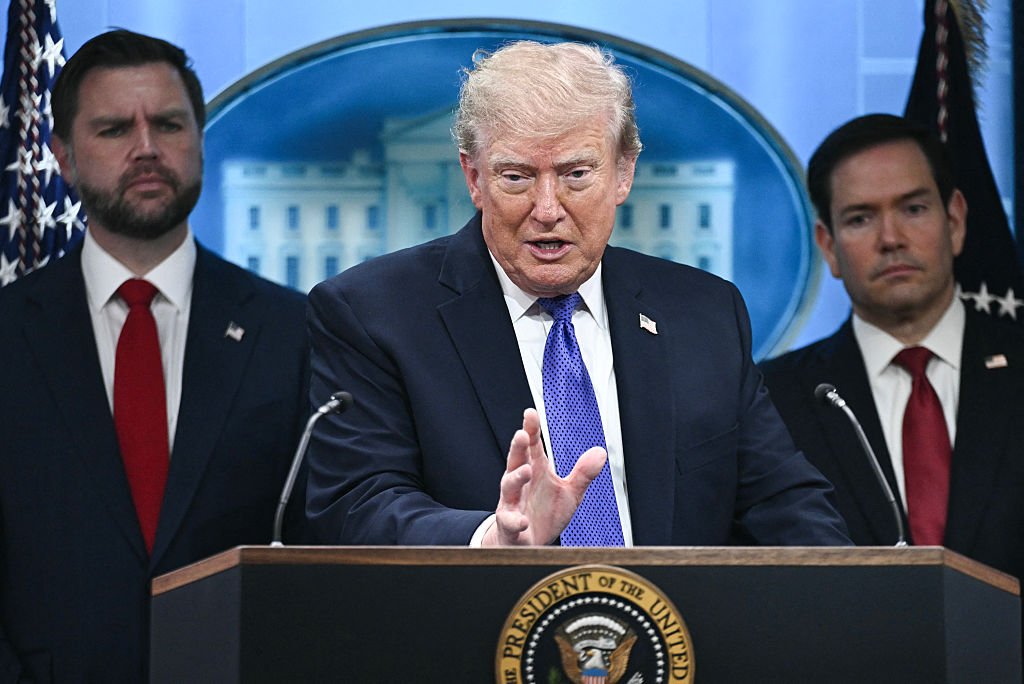
Vice President JD Vance questioned why some universities were using the visas so often
“Something weird is going on at these universities,” Vance said. “They are using these visas way too much. They are using them to undercut the wages of American grad students.”
The Department of Homeland Security has rejected claims that its policies are driving international students away from U.S. schools. A spokesperson called criticism of the administration’s actions misleading and said officials were working to stop people from violating visa rules
The agency also defended its efforts to ensure that student visas are used by people who intend to study
Colleges Warn of Campus and Economic Impact
University leaders say the decline in international enrollment could affect more than tuition income and job recruitment
Students from other countries bring different experiences, languages, and ideas to American campuses. They take part in classroom discussions, student groups, cultural events, and research projects
Sridhar said international students bring “a diverse group of viewpoints to campus in various kinds of conversations, whether they are in the classroom or outside the classroom”. He said this creates “richness and intellectual diversity”
At Indiana University, an international student from Myanmar organized a fundraiser after a major earthquake struck the country in 2025. The event included Burmese food and a discussion about the disaster
Christoph Irmscher, who directed the university’s Wells Scholars Program for 13 years, said the event helped other students understand the situation through the experience of someone connected to the country
“It was not just a culturally enriching event. It was also an exercise in putting yourself into the shoes of somebody else in ways that are normally not accessible to students in landlocked America,” Irmscher said
The Wells Scholars Program provides full scholarships, including living expenses. In earlier years, students from Brazil, Nigeria, Thailand, Turkey, Turkmenistan, and Zambia accepted the awards and moved to Bloomington to study
But in 2025, two scholarship recipients—one from South Africa and another from Central America—declined their offers. Irmscher said students were now more careful about deciding whether to study in the United States
“People are cautious now, and it’s more like weighing the benefits versus the disadvantages,” and whether to take a risk, he said. He also pointed to the effect of immigration enforcement images shared online
“In the culture of social media and TikTok, these clips of ICE agents brutalizing people on the street have an enormous ripple effect,” Irmscher said. “If you look different, if you feel that you are different, I’m sure that is something that affects your decision.”
Veena Dubal, general counsel for the American Association of University Professors, said international students have long played an important role in American higher education
“To think that the system could go on functioning politically, socially, economically without those students is to misunderstand what US higher education has always been, for as long as it’s been the best in the world,” Dubal said
She also argued that the country should focus on making college more affordable for American students rather than pushing international students out
“If the Trump administration cares about whether or not native-born Americans are getting access to higher education, the answer to that is not to push out immigrants,” Dubal said. “It is to make it more accessible. And how do you make it more accessible? You lower the prices.”
Read more:Trump Administration Tightens Scrutiny of International Student Internship Programs
Need help choosing the right university or study destination?
Start your FREE JIUniversity Admission Assessment today and discover the best international study pathway for your academic goals.
Source: www.universityherald.com