
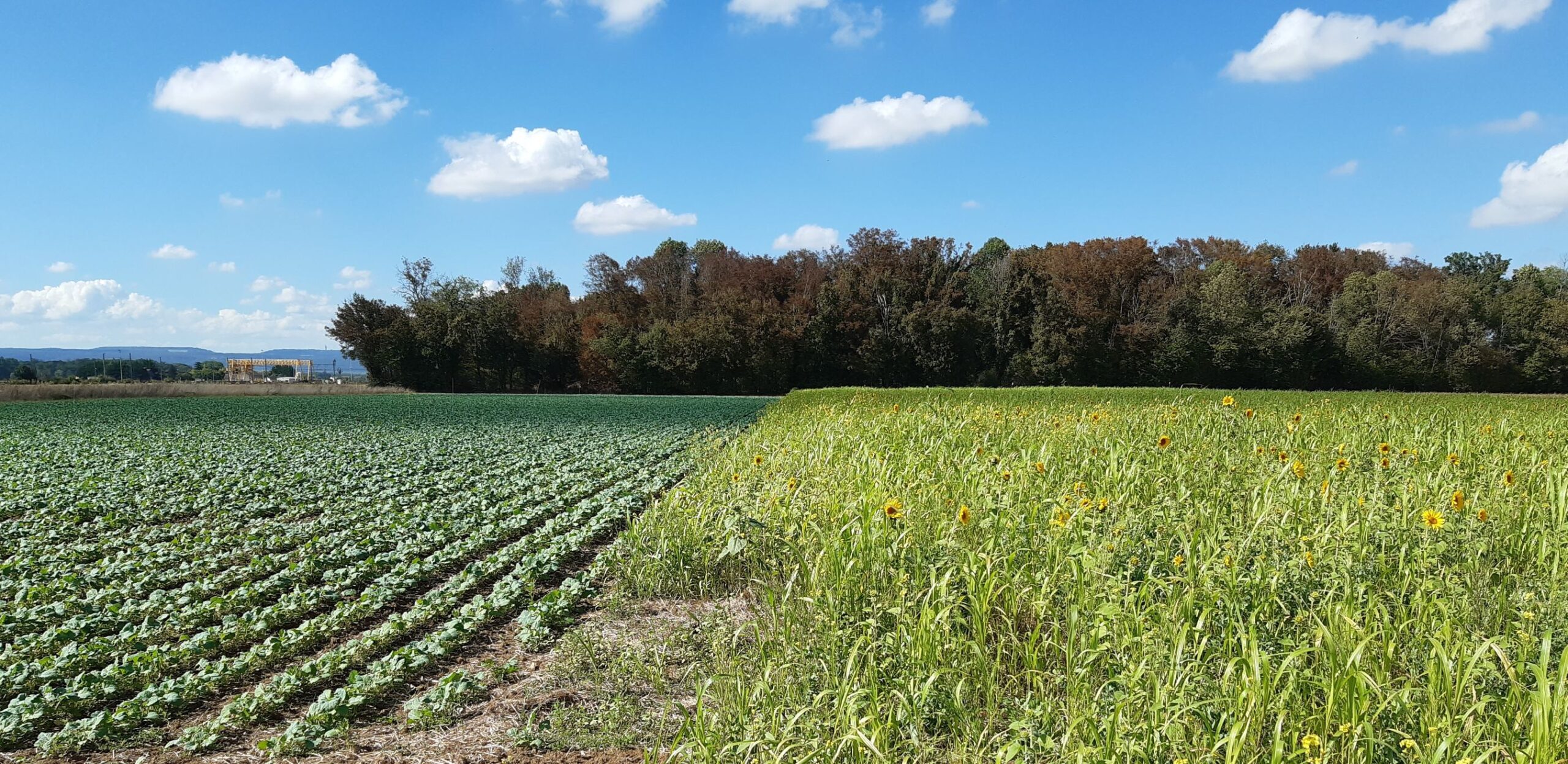
A 10-year experimental study in France shows the potential of pesticide-free agricultural production
The widespread and repeated use of pesticides has major impacts on the environment (soil, water and air pollution), human health and biodiversity, and comes with a major economic cost to both society and farmers. Can the use of pesticides be stopped on arable crops without compromising yields and economic viability? The Rés0Pest experimental network, coordinated by INRAE and involving the Purpan Engineering School and CIRAD, has released its findings after 10 years of research.
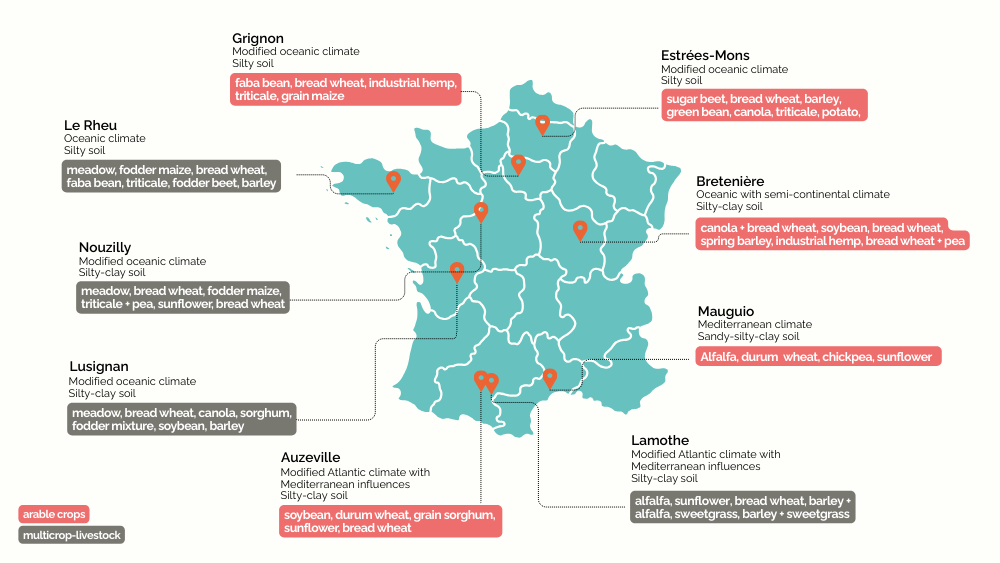
Rés0Pest, created in 2012 as part of a call for projects under the Ecophyto DEPHY EXPE programme, looked at nine original cropping systems that used no pesticides but had the option to use ploughing and synthetic fertilizers. These systems were developed during co-design workshops held in nine locations in France with extension specialists, farmers and researchers. The workshops covered a wide range of soils, weather conditions, and socioeconomic contexts (five agronomic cropping systems and four multicrop-livestock systems including temporary meadows) within INRAE’s network of experimental units, which are open-air labs managed by the Institute’s engineers and technicians.
The Rés0Pest project’s goal was to use zero pesticides while reducing biotic stress (caused by pests, fungi and weeds) as much as possible, with rotations that varied in duration from 5 to 9 years. The success of the tested systems was underpinned by a three-pronged approach based on agroecological crop protection principles:
- prevention (e.g., management of infected crop residues, use of healthy seeds, and cleaning of agricultural machinery)
- reliance on plant biodiversity (e.g., long and diverse crop rotations, with different crop families and sowing periods; companion crops and varietal mixtures)
- improvement or protection of soil health (e.g., stopping the use of pesticides, cover cropping, and limiting but not fully excluding ploughing)
The use of mineral fertilizers was allowed in these cropping systems
The yields of the various cropping systems were measured. When the results were compared with Agreste1 data based on region-specific contexts, yields for the pesticide-free systems were often below those of conventional systems using chemical pesticides, but in some situations they reached equivalent levels or even exceeded them. Damage from pests and diseases in the pesticide-free systems did not increase significantly over time.
Weed management was challenging in some situations, especially for certain perennial weeds like docks and sorrels2 in temporary meadows. Weed management within the Rés0Pest network improved over time, which is crucial given the long-term consequences of a single season of poor weed management for amplifying the weed seed bank in fields. In some cases, managing weeds required ploughing, a practice that runs contrary to soil conservation principles.
Over the 10-year study, conventional arable cropping systems at four locations (Auzeville, Bretenière, Estrées-Mons and Grignon) produced a satisfactory net profit margin. In 20% of years at these locations, estimated income was equal to or double income based on the French national minimum wage, whereas in 45% of site-years it was double or triple the national minimum wage and in 35% of cases more than triple the national minimum wage.
These results show that conventional, pesticide-free arable cropping systems in France can be productive and technically and economically feasible. However, creating such production systems involves diversifying crop rotations, developing appropriate marketing channels, and determining the economic value of the products from these systems. To do this, appropriate public policies are needed to support their widespread adoption. These findings also add to European discussions3 on accelerating the agroecological transition.
These analyses of agricultural, economic, environmental and social outcomes will continue with the 0phyto project, which was launched in France in 2025. This project will build on the progress made through Rés0Pest and extend to organic farming by integrating data from the French Organic Food and Farming Institute (ITAB) on organic cropping systems
1. The French Statistics and Forecasting Department (for agriculture, food, forestry and fishing)
2.Perennial weeds that are especially problematic for cropping systems
3.The Rés0Pest findings will support discussions through the European alliance “Towards a Chemical Pesticide-Free Agriculture”, which includes 34 research institutes from 20 European countries
“We tested the feasibility and performances of pesticide-free cropping systems based on a conventional approach, i.e., allowing the use of synthetic fertilizers. INRAE, as a public research stakeholder, must take risks to explore the full realm of possibilities.” Jean-Noël Aubertot, INRAE Research Director at the Agroecology, Innovations and Territories Joint Research Unit
References
Ortiz-Vallejo D., Cellier V., Deytieux V. et al. (2026). Pesticide-free agriculture: is a third way possible besides organic and conventional agriculture? Plant Disease, DOI: https://doi.org/10.1094/PDIS-09-25-1839-FE
More information about Rés0pest
- https://ecophytopic.fr/dephy/conception-de-systeme-de-culture/projet-res0pest
- Cellier V., Ortiz-Vallejo D., Colnenne-David C. et al. (2024). Analyse de la durabilité socio-économique et environnementale d’un réseau de systèmes de culture zéro-pesticides (Rés0Pest) après 10 ans d’expérimentation. Innovations Agronomiques, 98, 300-318, 10.17180/ciag-2024-vol98-art20.hal-04787329v2
thematic
Agroecology
Crop rotation: a global lever for yield, nutrition and revenue
PRESS RELEASE – An international study involving INRAE and coordinated by China Agriculture University has shown that the practice of crop rotation outperforms continuous monoculture in terms of yield, nutritional quality and farm revenues. The results, based on more than 3600 field observations from 738 experimental trials across six continents, have now been published in Nature Communications
03 November 2025
thematic
Biodiversity
Identifying ecological thresholds for optimal ecosystem management
PRESS RELEASE – INRAE and CNRS have conducted a study of 150 grasslands in temperate zones to identify ecological thresholds beyond which changes in biodiversity can lead to the overall dysfunction of these ecosystems. The study analysed plant biodiversity, agricultural practices and climate data over 13 years. The results, published in Nature Ecology & Evolution, show that above a fertilisation level of 80 kg of nitrogen per hectare per year, grassland species lose their ability to coexist.
05 June 2025
thematic
Agroecology
“European Chemical Pesticide-Free Agriculture in 2050”: the results of a groundbreaking foresight study
PRESS RELEASE – Harnessing research to speed up the agroecological transition aligns with the objectives of the European Green Deal and addresses the strong demand from public authorities, stakeholders and society at both the national and European levels. For more than two years, over 144 experts investigated possible ways to eliminate pesticides from agriculture on a European scale for the “European Pesticide-Free Agriculture in 2050” foresight study.
21 March 2023
Need help choosing the right university or study destination?
Start your FREE JIUniversity Admission Assessment today and discover the best international study pathway for your academic goals.
Source: www.inrae.fr
Tag:10year, experimental, France, Shows, study