
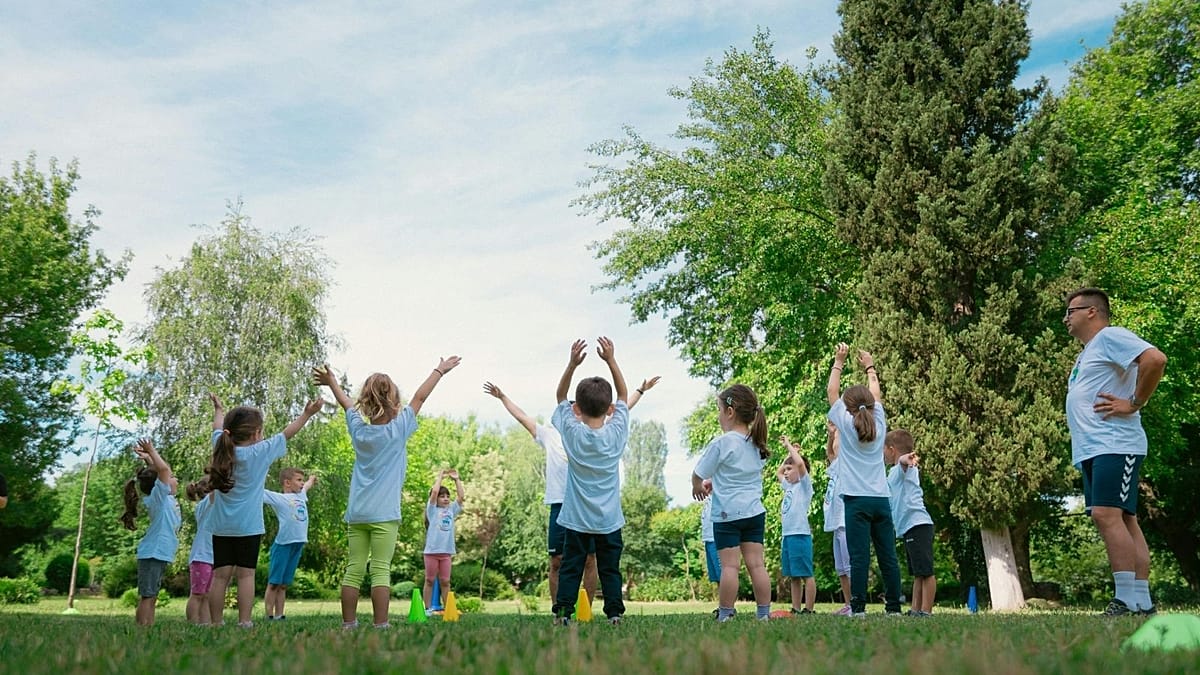
Europe’s youth is getting weaker, study finds
By Marta Iraola Iribarren
Published on 31/07/2026 – 7:05 GMT+2
•Updated
16:06
European children are in worse physical shape than at almost any point in the last 60 years, new research shows, which will have an impact on both the current and future health of this population
Children and adolescents in Europe are not reaching adequate levels of physical fitness in terms of strength, flexibility and body composition, a new study has found
Researchers at the <a href="https://jiuniversity.com/how-to-really-choose-a-university-to-study-abroad/” title=”How to really choose a university to study abroad”>University of Zaragoza found a decline in paediatric health-related physical fitness from 1990 to the present
The findings, published in the journal Sports Medicine – Open, detailed changes in the main indicators of physical health: muscular strength, flexibility, body composition and cardiorespiratory fitness
These components are key determinants of both the current and future health of this population, meaning that “we are missing a major opportunity that will be difficult to recover”, the authors said
The study analysed 417,362 participants aged 6 to 16 from 20 European countries, spanning 1965 to 2023
Upper-body strength has generally declined since the 1970s, with a brief period of stability between 1980 and 2000 before falling again, the authors found. Lower-body strength, measured through jumping tests, increased until the 1980s but has since steadily decreased
The team also observed a consistent, linear deterioration, reflected in increasing body fat, a trend which is often underestimated when using body mass index (BMI) alone, they noted
The worst trend was in flexibility, showing a continuous decline that has accelerated since 2000
On cardiorespiratory fitness — the ability of the heart, lungs, and blood vessels to efficiently deliver oxygen to working muscles during sustained physical activity — the authors noted that, following a long-term decline, the most recent data suggest the trend may have stabilised between 2015 and 2023
However, they warn that levels remain below those recorded in previous decades
“These findings reinforce the need to step up efforts to promote physical activity through public institutions,” the researchers said in a press release
Importance of physical fitness early in life
Physical fitness is an important indicator of health during childhood and adolescence, the authors noted
Cardiorespiratory endurance and healthy body composition during childhood and adolescence are associated with a better cardiovascular profile and reduced mortality risk in later life. Muscular strength during these periods is, in turn, related to healthier body composition
The World Health Organisation (WHO) recommends that children and adolescents engage in at least 60 minutes of moderate-to-vigorous physical activity daily, including muscle and bone-strengthening activities at least three times per week
Yet, over 75% of European adolescents do not meet these recommendations
Worldwide, the WHO notes that physical inactivity causes around 6% of the burden of disease from coronary heart disease, 7% of type 2 diabetes, 10% of breast cancer and 10% of colon cancer
In addition, premature deaths (9.0%), all-cause mortality (7.2%) and cardiovascular disease deaths (7.6%) are attributable to physical inactivity
Go to accessibility shortcuts
Need help choosing the right university or study destination?
Start your FREE JIUniversity Admission Assessment today and discover the best international study pathway for your academic goals.
Source: www.euronews.com