New study: Europe continues to build waste incinerators despite excess capacity
New study: Europe continues to build waste incinerators despite excess capacity
Published
13 Oct 2026
Brussels, 13 October 2026 – Europe continues to build new waste incinerators, despite already reaching excess capacity of almost 65 million tonnes, according to a new Zero Waste Europe study published today
The study, “Incineration overcapacity in Europe: 2026 data update“, finds that the combined capacity of incinerators in the EU has reached 198.4 million tonnes of waste in 2022, while only around 133.6 million tonnes of waste were treated, meaning that Europe currently has almost 65 million tonnes of additional capacity for waste incineration. The study also assesses a hypothetical scenario in which some of the 77.5 million tonnes of waste currently landfilled each year were redirected to incineration, potentially increasing demand for incineration capacity. Even in this hypothetical scenario, the authors find that current incineration capacity would not be fully used, if recyclable materials are more widely sorted and extracted from the residual waste, in line with the EU’s recycling targets.
Janek Vähk, Zero Pollution Policy Manager at Zero Waste Europe, said:
“There is really no justification for continuing to build new incinerators. On top of the 65 million tonnes of unused capacity Europe already has, we identified plans to build or expand incineration plants to burn at least another 8 million tonnes of waste. The EU urgently needs to address this growing overcapacity, rather than fixating on more incineration. Our priority should be reducing waste, increasing reuse and recycling, and strengthening sorting and separate collection systems.”
The new study is based on analysis by Equanimator for Zero Waste Europe, and it is published as part of the 2026 Global Week of Action to Stop Incineration, happening each year in October. It is based on official Eurostat data on waste treatment from 2022 – the last year for which information is available
Zero Waste Europe and 83 other organisations are urging policymakers this week to introduce a moratorium on new incineration capacity. They warn that the current approach risks locking Europe into decades of waste burning, by creating pressure to keep plants running and supplied with waste, instead of prioritising waste prevention, reuse and recycling
The organisations also call on the European Commission to eliminate incentives for excess municipal waste incineration, by including it in the EU Emissions Trading System (EU ETS) without free allocations, establishing an EU-level mechanism to coordinate the progressive decommissioning of excess incineration capacity, and introducing measures to advance sorting of mixed waste, so that recyclable materials are recovered, rather than burned.
Notes to Editors
- The new study, “Incineration overcapacity in Europe: 2026 data update – the case for a moratorium on incineration”, is available here.
- The study refers to two classifications of waste incineration facilities according to the European Union’s energy efficiency formula from the Waste Framework Directive.
- R1: The classification for facilities that meet or exceed the specific efficiency threshold set in the Waste Framework Directive for energy recovery/generation.
- D10: The default classification if the facility fails to meet the required energy efficiency score, or if waste is incinerated without sufficient energy capture disposal.
- According to Eurostat data, In 2022 (the latest year for which data were available from Eurostat), the combined EU capacity for waste treatment at incinerators was 198.4 million tonnes:
- 184.3 million tonnes at incinerators classified as ‘R1’
- 14.2 million tonnes at incinerators classified as ‘D10’See Eurostat, Treatment of waste by waste category, hazardousness and waste management operations, (updated July 2025).
- The open letter to the European Commission President, Ursula von der Leyen, has been signed by more than 80 civil society organisations. They jointly call for the EU to stop the expansion of waste incineration and address Europe’s growing incineration overcapacity. The letter will be released on 14 October.
- Case studies:A new report by GAIA, also published as part of the Global Week of Action to Stop Incineration, highlights 20 incinerators from around the world and their impact on surrounding communities. The report, The Burn Book: Incinerators that Threaten the Climate, Public Health, and our Finances, includes four incinerators from the EU: Amager Bakke (Denmark), Isséane Incinerator (France), Attero Moerdijk Facility (Netherlands), and the Rome Waste-to-Energy Plant (Italy) which is still under construction.
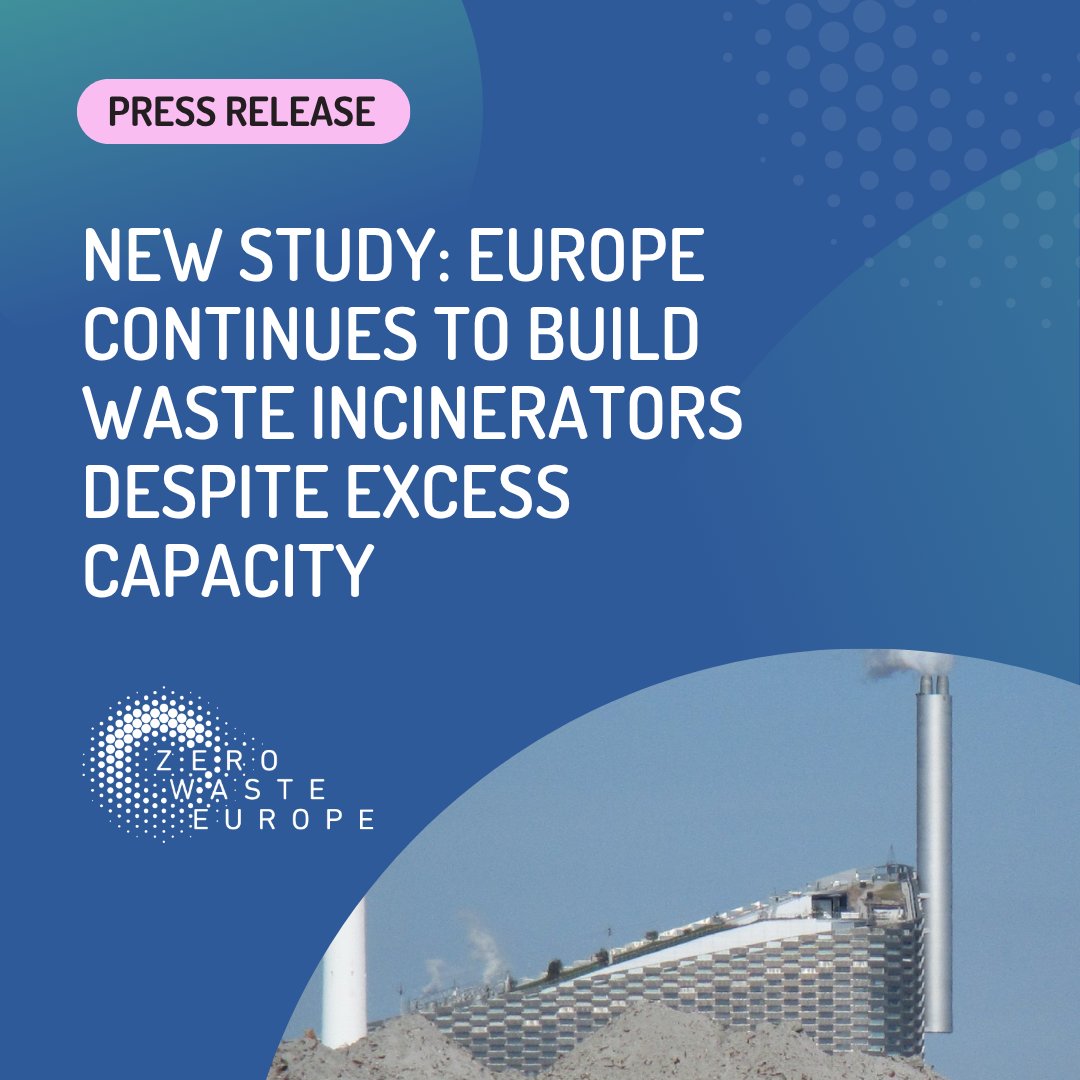
- Amager Bakke (CopenHill) – Denmark:Amager Bakke is a strong example of overcapacity that leads to waste incineration lock-in on a local level. Before final approval, Copenhagen officials raised concerns that the planned facility was too large relative to anticipated future residual-waste volumes and could interfere with recycling objectives. The completed plant nevertheless had a capacity of approximately 560,000 million tonnes (MT)/year, while subsequent estimates of locally available waste fell toward approximately 350,000 MT/year.The original ownership agreement restricted imported waste, but those restrictions became increasingly difficult to maintain as waste volumes declined and the plant faced substantial debt service obligations. In 2016, the five owner municipalities changed their agreement to permit imported waste and biomass under specified circumstances. By 2022, Copenhagen explicitly acknowledged that waste deliveries from the owner municipalities were declining because more waste was being separated for recycling, while ARC remained highly indebted. Municipalities therefore approved additional flexibility for imported waste as part of efforts to stabilize the company’s finances. Zero Waste Europe reports that approximately 30,000 MT of imported waste was burned in 2018, primarily from the British Isles.Approximately 420,423 people live within 5 kilometers of the Amager Bakke facility. Amager Bakke has not generated a well-documented pattern of neighborhood health complaints directly tied to facility emissions.
The Rome Waste-to-Energy Plant in Italy is another current example of overcapacity. Construction began in May 2026 on a new incineration facility at Santa Palomba, Italy, with a planned waste incineration capacity of 600,000-MT/year and the first waste deliveries scheduled for September 2029. The nearly EUR 946.1 million project will bind Rome to a 33-year concession for one of Europe’s largest new municipal waste incinerators, even as the city plans to increase separate collection to 70% by 2035. Local governments and community groups have opposed the project over its size and location, raising concerns about air pollution, health, water resources, traffic, existing contamination and the potential for a large, long-lived incinerator to compete with waste reduction and recycling. The GAIA report, The Burn Book: Incinerators that Threaten the Climate, Public Health, and our Finances, is available here under embargo until 13 October 2026.
- The Global Week of Action to Stop Incinerationwas started by the Global Alliance for Incinerator Alternatives (GAIA) as a way to build global solidarity, amplify and connect local struggles at the global level, challenge incineration as a false climate and waste solution, and lastly, expose and challenge climate finance for incineration. The 2026 Global Week of Action runs from 13 to 16 October.
Press contacts
Spokespersons are available online and for phone interviews
Rafael Shilhav, Head of Communications at Zero Waste Europe (in English) – [email protected] or [email protected] / +32 490 11 36 76
Janek Vähk, Zero Pollution Policy Manager at Zero Waste Europe (in English and Spanish) – [email protected]
About Zero Waste Europe
Zero Waste Europe (ZWE) is the European network of communities, local leaders, experts, and change agents working towards a better use of resources and the elimination of waste in our society. We advocate for sustainable systems; for the redesign of our relationship with resources; and for a global shift towards environmental justice, accelerating a just transition towards zero waste for the benefit of people and the planet. www.zerowasteeurope.eu
Need help choosing the right university or study destination?
Start your FREE JIUniversity Admission Assessment today and discover the best international study pathway for your academic goals.
Source: zerowasteeurope.eu