AI glasses put Korea’s college exam fairness to the test
Kim Sung-tak
The author is an editorial writer at the JoongAng Ilbo.
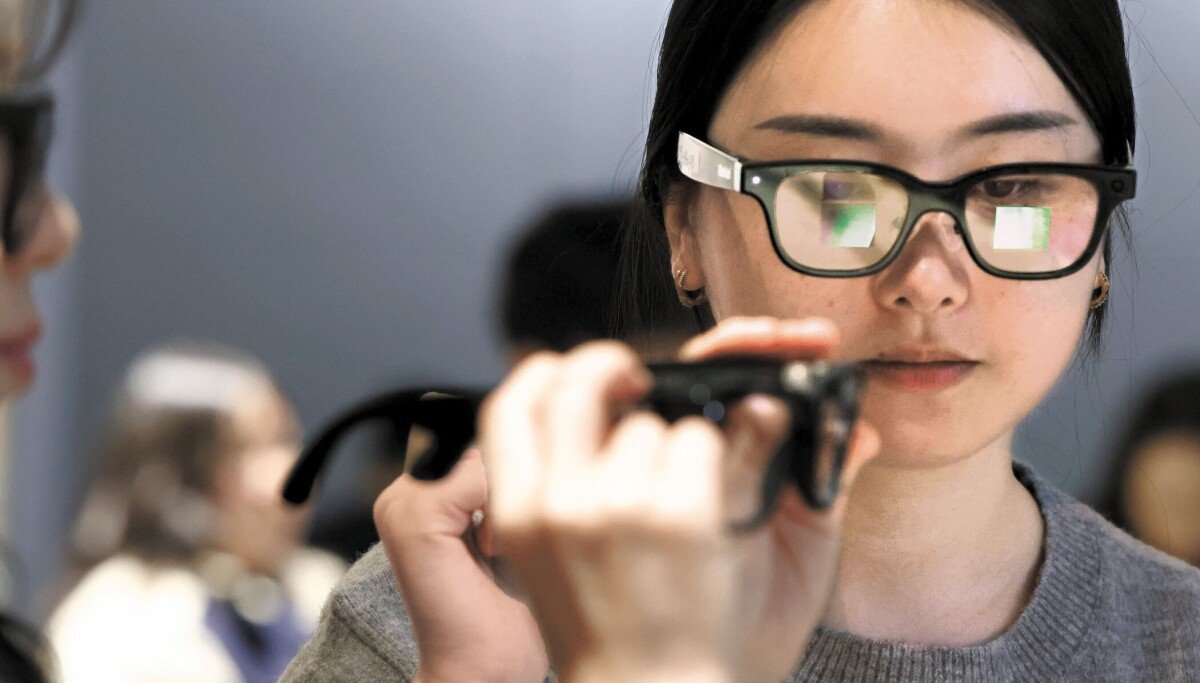
With the College Scholastic Ability Test just a week away, students and parents face a worry that scarcely existed before: eyeglasses
Smart glasses equipped with AI have prompted fears that examinees could use them to obtain answers during Korea’s crucial college entrance examination
The government and regional education offices are scrambling to prevent cheating. President Lee Jae Myung has ordered countermeasures, while the Ministry of Education plans to station personnel at every testing center to identify AI glasses. It is also seeking penalties that could include criminal prosecution and a suspension from the examination for up to three years. The measures reflect the extraordinary stakes attached to a test whose results can determine admission to the country’s most sought-after universities. Even a small perceived advantage could undermine confidence in the fairness of the entire national testing system.
Yet even families with no intention of using such devices are deeply anxious. Online student forums are filled with concerns from examinees who normally wear black, thick-framed glasses resembling smart glasses. They fear being singled out for inspection, even though their ordinary glasses have no electronic functions. For families who have spent three years preparing for this single day, everything matters: getting enough sleep, avoiding a cold and choosing what to eat before and during the examination.
Some are debating whether changing frames would prevent unnecessary disruption. One student decided against switching glasses just a week before the test, fearing difficulty adjusting. Another parent regretted not arranging laser eye surgery earlier. One worried that a child accustomed to touching the temples of their glasses might attract an invigilator’s attention and become nervous if inspected while solving questions.
Other developments have provoked anger rather than anxiety. On an anonymous university student forum, someone contemplating wearing AI glasses to the exam wrote, “If I get caught, too bad. If not, I’ll get into medical school.” Another claimed to have registered for the test intending to wear AI contact lenses, reasoning that getting caught would merely mean returning to their current university. Outraged students and parents demanded harsher sanctions, including barring enrolled university students from retaking the exam for at least five years or disqualifying offenders from all nationally accredited examinations. Their frustration is understandable: A student already attending university might view disqualification as a manageable setback, while a first-time examinee could face much greater consequences.
The Education Ministry is withholding details of inspection procedures, concerned that revealing them could help cheaters evade detection. Parents have proposed attaching inspection stickers to the ends of every glasses frame before testing begins to prevent substitutions. Some have gone further, suggesting internet service be disabled around examination sites, much as communications can reportedly be restricted during presidential movements. Others want surrendered mobile phones stored far enough away to prevent smart glasses from connecting through tethering. These suggestions illustrate how far parents are willing to go to protect the integrity of the examination, even when the practical consequences of such measures remain unclear.
Such proposals are not entirely hypothetical. Some countries block internet access or social media during entrance examinations. An Oct. 27 report by the digital rights organization Access Now documented exam-related restrictions in countries across the Middle East and North Africa. Governments cite cheating prevention, but the organization opposes shutdowns on human rights grounds. Its findings also show that some countries are moving away from nationwide blackouts, although others continue imposing restrictions.
Cheating involving AI glasses has already been detected in university and high school examinations, as well as tests for professional qualifications. Meanwhile, the use of AI in performance assessments that contribute to high school grades is raising fairness questions. Schools are confronting dilemmas they have never faced before. Why should assistance from professional parents or private tutoring institutions be treated differently from help supplied by AI? Where should legitimate learning end and prohibited assistance begin?
Of course, devices capable of solving difficult college entrance questions almost instantly must be kept out of examination rooms. Fairness requires that every candidate compete under the same rules. But AI can now retrieve legal precedents, prompting predictions that it could replace junior lawyers. How long can schools preserve traditional examinations while demanding that students keep their distance from technologies already transforming professional work?
Perhaps the time is approaching to abandon the conventional belief that academic ability and reasoning can be reliably ranked by asking students to solve difficult mathematics problems or select one correct answer from five options after reading a passage. Such tests may measure certain skills, but they cannot necessarily capture the full range of abilities students will need
Children already have easy access to AI through their phones. If Korea wants them to compete internationally in the future, it must reconsider what education should teach, how learning should be evaluated and what standards universities should use for admission. AI glasses have presented the country with a particularly difficult assignment, one extending far beyond preventing cheating on examination day.
Need help choosing the right university or study destination?
Start your FREE JIUniversity Admission Assessment today and discover the best international study pathway for your academic goals.
Source: www.koreajoongangdaily.com