Korea’s first university admissions program for refugees offers hope, but barriers and resistance remain
Korea is a notoriously difficult country to be granted refugee status, which means that social policies often overlook refugees’ needs and hardships due to their sheer lack of numbers. Education is one example, and students have no choice but to rely on charitable goodwill from nonprofits because of their legal status
That was the case for Marcel (alias), a 20-year-old student at a national university outside Seoul, who dreams of becoming a cybersecurity expert to “give back to Korea” for helping their family
Marcel’s family fled war in their home country several years ago and came to Korea, where they were granted refugee status. Although the family found safety, the father’s finances became unstable during the process, leaving the household dependent on government basic livelihood assistance. Despite the hardship, Marcel prepared for university entrance exams
“I wanted to find a job after graduating from university and properly settle down in Korea. After all, I’m going to keep living here,” Marcel said
However, after enrolling, tuition became a major obstacle. Marcel had to pay around 3 million won ($2,200) per semester, the same tuition charged to international students, while also contributing to the family’s living expenses. To make ends meet, Marcel worked overnight shifts at a logistics facility on weekends and at a restaurant from 5 p.m. to 9 p.m. after classes on weekdays, and made around 1.5 million won a month.
With little time or energy left to focus on studying, Marcel turned to the Korea Student Aid Foundation for assistance — only to be told that although their family was in the lowest income bracket, the lack of Korean citizenship made it difficult for the state-run foundation to give support
Fortunately, a nonprofit organization agreed to cover part of Marcel’s tuition this semester
“For the first time in four semesters, I can finally concentrate on my studies,” Marcel said. “My professor even complimented my coding skills this semester. For the first time, I’m looking forward to seeing my grades.”
Sogang University’s trailblazing scholarship
Korea’s first university admissions program specifically for refugees has been established to address the lack of educational support for students like Marcel, who have had to pay international student tuition fees while relying on scholarships from nongovernmental organizations (NGO)
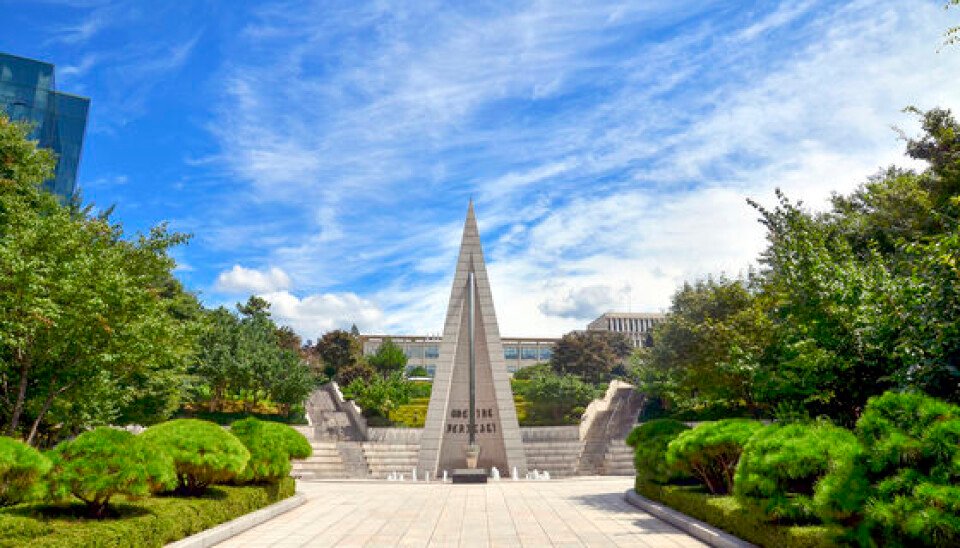
Sogang University has introduced a special admissions track for young people with refugee backgrounds, including recognized refugees and holders of humanitarian stay permits, within its existing international student admissions process
The program will begin accepting students for enrollment in March 2027
The university and an external NGO foundation will select two applicants as outstanding candidates who will receive tuition and living expense support for up to eight semesters, provided they maintain the required academic performance
The Francis Scholarship, established for the program, will be funded through donations from supporters who share its goals, while the foundation will cover living expenses. The funding is separate from the university’s other scholarship re
“The university’s commitment to Jesuit educational principles, including providing educational opportunities to vulnerable groups, aligned with the Justice Ministry’s goal of promoting international solidarity, leading to an agreement to cooperate on establishing the admissions program in June,” a Sogang University official said
The initiative is a “meaningful step toward protecting minorities and guaranteeing educational rights for young refugees with academic ambition and potential,” according to Chang Bok-hee, a professor in the Department of Police and Law at Sun Moon University and a former member of the Justice Ministry’s Refugee Recognition Review Committee
Sogang University already has two refugee students who enrolled through its international admissions process under a complementary pathway program, which allows refugees to legally reside in third countries through opportunities such as education or employment. The two students enrolled last year and receive tuition and living expense support from the United Nations Refugee Agency (UNHCR) and a foundation.
“With these students settling in successfully, I understand that Sogang University established the new admissions track and scholarship to expand support to refugees already living in Korea,” an official from the Gipum Nanum Foundation, which helped develop the program, said
The foundation estimates that around 50 refugee students in the greater Seoul area alone could qualify for the program
Students divided over the program
The new admissions program has also sparked debate among Sogang University students
On an online student community, some welcomed the initiative as a positive step toward embracing minorities, while others questioned why refugees should receive priority support when Korean citizens also face gaps in educational assistance
“It’s difficult to understand why refugees should be prioritized for support when there are also Korean citizens who fall through the cracks,” one response read
“We were caught off guard because the university did not provide us with a separate explanation before establishing the admissions program,” a Sogang University student council official said. “There are also concerns on campus about the continuing increase in the number of international students.”
The refugee admissions program also faces clear limitations, as it effectively imposes the same requirements on refugees as on international students
“In an effort to ensure fairness by applying the same conditions as the international admissions process, the program still requires applicants to obtain graduation certificates and academic transcripts from their home countries and pay the same tuition fees as international students,” a foundation official said
“For refugee students who have virtually no way of contacting their home countries and face financial difficulties, these requirements could feel like being given false hope.”
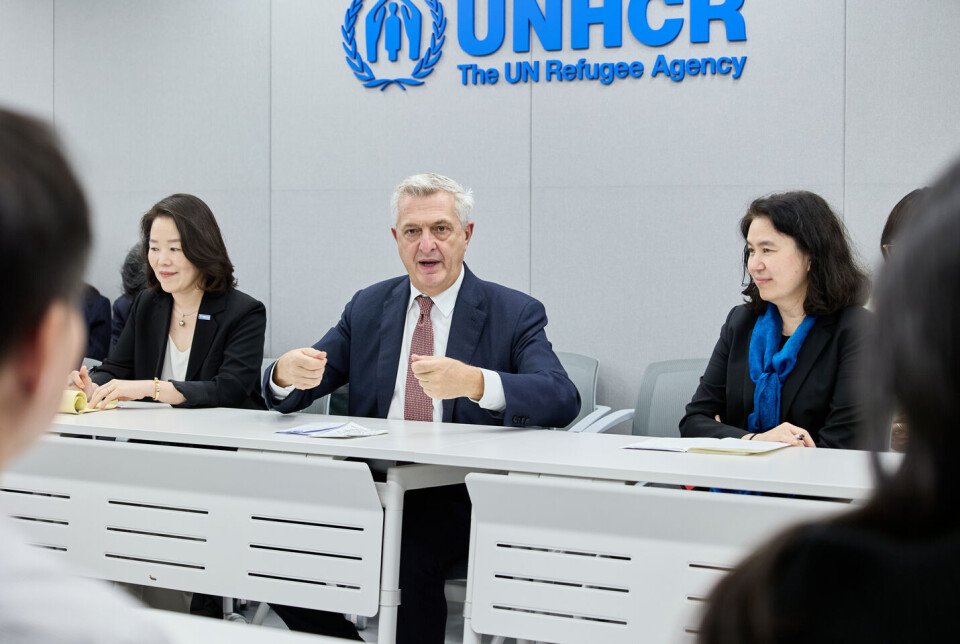
To address the issue, the Justice Ministry announced proposed revisions to the enforcement decree of the Refugee Act on Oct. 15. Under the proposal, refugees who have difficulty obtaining recognition of their academic qualifications from their home countries would be able to have their educational credentials assessed through a process involving the ministers of justice and education
“We will continue working with the Justice Ministry, Sogang University and UNHCR to establish the admissions program,” the foundation official said
Refugee program difficult to settle in Korea
It remains uncertain whether Sogang University’s initiative will spread to other universities
“We contacted around four universities this year to propose establishing refugee admissions programs,” an official from Advocates for Public Interest Law, a public interest law organization preparing to support refugee students with university applications, said. “All of them said, ‘The intention is good, but it will likely take time to persuade members of the university community,’ and suggested waiting to see how things develop.”
Seoul National University also considered admitting refugee students in a planning report for its new College of Global Talent, which is scheduled to open to international students in the second semester of 2027
“From the perspective of public responsibility, the university could also consider ways to admit refugee students,” the report said. “The issue is timely, as many higher education institutions in major developed countries already operate such programs.”
However, the report also took a cautious stance, noting that “complex legal and policy judgments would be required.”
Similar programs are already well-established overseas
In Japan, 15 universities have participated in a refugee higher education program since 2006, with 75 students graduating through the initiative
Canada has supported more than 2,500 refugee students since 1978, while Germany and Italy launched related programs in 2015 and 2019, respectively
“Policies in developed countries are based on the understanding that helping refugees become self-reliant through education ultimately reduces government spending in the long term,” Prof. Chang said. “Other universities also need the determination to provide at least a minimum opportunity to those who otherwise have no opportunities at all.”
Yoon In-jin, a sociology professor at Korea University, emphasized that addressing the concerns of Korean students and supporting vulnerable groups need not be mutually exclusive
“Alleulnerable people are things that can be pursued together,” Yoon said. “We need to ensure that this discussion moves in a positive direction rather than becoming a divisive debate that pits one group against another.”
Need help choosing the right university or study destination?
Start your FREE JIUniversity Admission Assessment today and discover the best international study pathway for your academic goals.
Source: www.koreajoongangdaily.com
Tag:Admissions, First, Koreas, program, University