Leading Europe’s science and research future
<img src="https://jiuniversity.com/wp-content/uploads/2026/09/THE_IHE_LOGO.png” alt=”Logo”>
Sponsored by
Leading Europe’s science and research future
Open science has become a strategic priority for universities across Europe. The challenge has shifted beyond expanding access to ensuring that reliable, high-quality science can travel farther than publication
25 Jun 2026

Sponsored by
Frontiers
Discover how Frontiers helps researchers maximise the impact of their work.
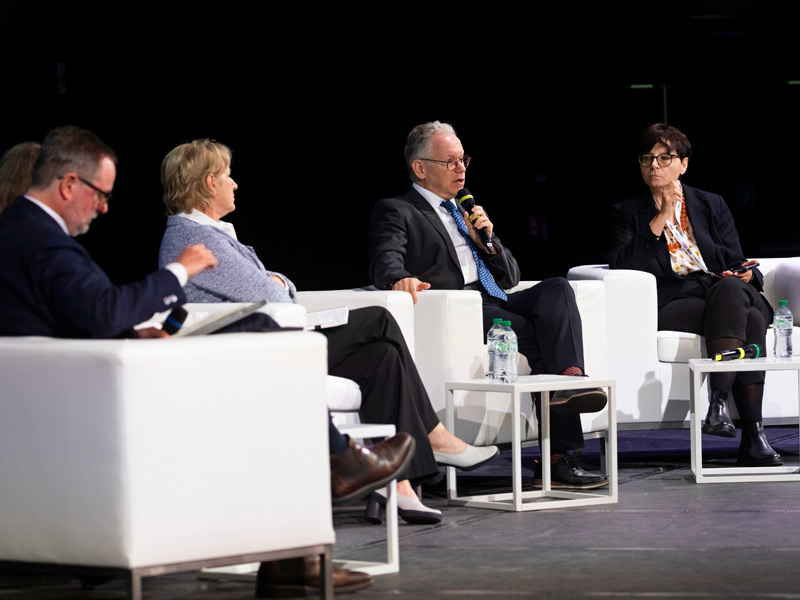
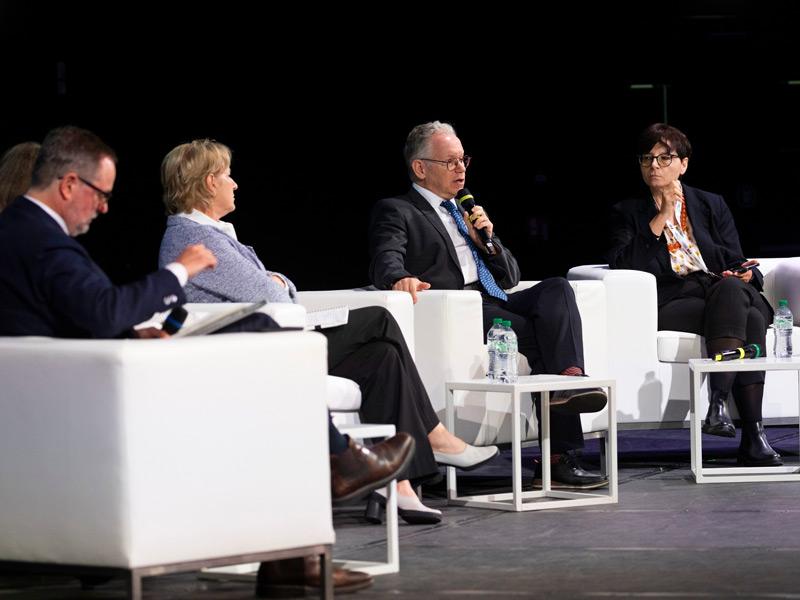
Open science, with its defining features of transparency, knowledge sharing and increased access, is fundamental to securing the world’s future. It promotes communication and trust at a time when faith in science and research is under threat globally. However, maintaining confidence and quality in science and its influence on policy and innovation remains a challenge. This was the central theme of a panel discussion, which was held in partnership with Frontiers, during the 2026 THE Europe Universities Summit.
The panellists identified communication as the key foundation for the future of science and its impact on communities and Europe as a whole. “We are losing the battle of communication,” said Marcelo Knobel, executive director of The World Academy of Sciences. “We have to pay more attention to communications to show the importance of science and the importance of higher education, without which we don’t have any future,” said Knobel.
Collaboration is vital, even though the geopolitical clashes in today’s world make it more challenging. “We, as the higher education sector, should work together to keep this fundamental collaboration,” Knobel said
Curated by Eleonora Colangelo, policy lead at Frontiers, the conversation explored two interconnected themes: open health, particularly the role of data sharing, interdisciplinarity and trust in building resilience and preparedness in health systems; and national policy readiness, including the challenge of bringing together universities, governance, incentives and public investment to advance openness.
“Science that can be trusted because it’s high quality and validated, and the ability to share science openly and quickly across sectors and borders are crucial elements for translating what happens in the university and labs into direct economic benefits and competitiveness,” Stephan Kuster, director of external affairs at Frontiers, a leading science publisher and open science platform. “But both of these things are under strain today globally, but also in Europe.”
Ilaria Capua, professor and senior fellow of global health at the Johns Hopkins University School of Advanced <a href="https://jiuniversity.com/open-call-for-international-scholarships-programme-marshall-islands-fundsforngos/” title=”Open Call for International Scholarships Programme (Marshall Islands) – fundsforNGOs”>International Studies Europe, underscored the importance of trust. “There is an erosion of trust in science and in institutions,” she said.
Image
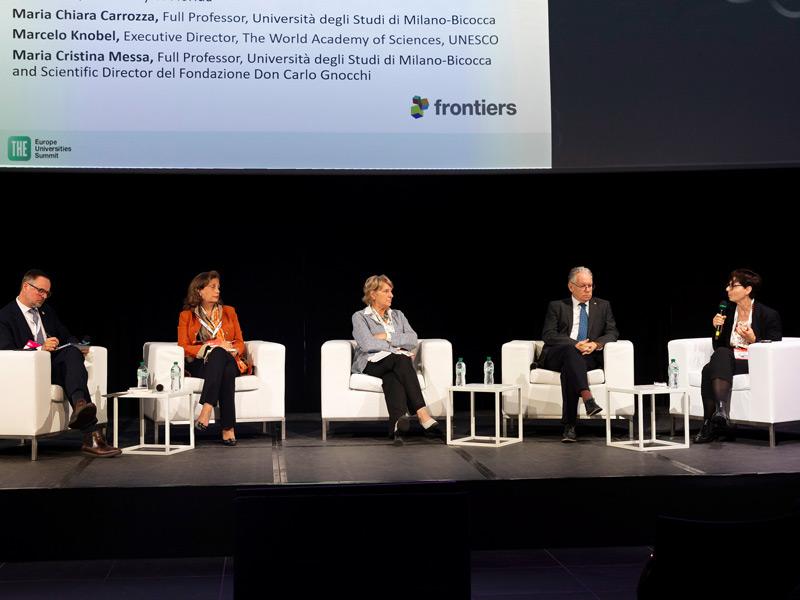
Capua, who specialises in viruses, added that scientists need to regain the public’s trust. She emphasised the role of interdisciplinarity in addressing global challenges. She pointed to the European Health Data Space, describing it as “truly revolutionary infrastructure”. However, it focused on human data, excluding information on animals and the environment. This impedes researchers’ and health authorities’ ability to monitor, respond to and predict potential disease outbreaks, she said.
Maria Cristina Messa, full professor of diagnostic imaging at the University of Milano-Bicocca and Italy’s former minister of university and research, echoed the importance of breaking down barriers between sectors and communities. She highlighted the disconnect between academia and industry, which is often exacerbated by regulations. “We have a scientific culture in Europe but not an impact culture,” she said, adding that when it comes to important issues such as pandemics, European countries need to bring scientific and industry communities together to foster a culture of impact.
Maria Chiara Carrozza, full professor of bioengineering and biorobotics at the University of Milano-Bicocca and Italy’s former minister of university and research, said that research needs to incorporate integrity, ethics and security. At the same time, universities need to change with the world. Infrastructure for collecting, managing and accessing data will be “the business of the future”, she concluded. “Europe must understand that this is crucial, together with the idea of engaging talents.”
The panel:
- Ilaria Capua, professor and senior fellow of global health, Johns Hopkins University School of Advanced International Studies Europe
- Maria Chiara Carrozza, full professor of bioengineering and biorobotics, University of Milano-Bicocca, and former minister of university and research, Italy
- Maria Cristina Messa, full professor of diagnostic imaging, University of Milano-Bicocca, and former minister of university and research, Italy
- Marcelo Knobel, executive director, The World Academy of Sciences
- Stephen Kuster, director of external affairs, Frontiers (chair)
Find out moreabout Frontiers
Connecting research and humanities through creative collaborations
4 minute read
1
‘You can’t just lecture students any more’
2
Redefining success in academia
3
‘What I learned from being a university student again’
4
Make AI literacy a foundational element of course design
5
You only get one first class of term – make it count
6
International study need not depend on air travel
7
Three shifts in course design to update pedagogies for AI
8
Dear educators, Gen Z here. Can you teach us like it’s 2026?
9
How to redesign a university curriculum at scale
10
Assessing students’ academic writing when they can use AI
Need help choosing the right university or study destination?
Start your FREE JIUniversity Admission Assessment today and discover the best international study pathway for your academic goals.
Source: www.timeshighereducation.com