

Fraud shocks, institutional autonomy, and the debate over separating exams
Vietnam’s university admissions evolution
Fraud shocks, institutional autonomy, and the debate over separating exams
As Vietnam shifted toward multiple-choice testing and granted admissions autonomy to universities, the system was rocked by two massive cheating scandals in 2018 and 2026
Following the 2018 fraud scandal, the examination process was further adjusted. Starting in 2019, universities were tasked with grading multiple-choice papers to increase objectivity. In 2020, the exam was officially renamed the High School Graduation Exam, solidifying its primary goal as graduation approval. Along with this, the amended Law on Higher Education granted admissions autonomy to higher education institutions.
Universities began to diversify their admission methods, utilizing high school academic transcripts, <a href="https://jiuniversity.com/scholarships-for-international-students-in-the-uk/” title=”Scholarships for international students in the UK”>international certificates, awards from national student competitions, competency assessment exams, thinking evaluation exams, or a combination of various criteria.
Since 2022, regardless of the admission method used, candidates must register their applications on the Ministry of Education and Training general admission system to undergo a nationwide screening process
In parallel with graduation exam scores, many independent exams emerged, such as the competency assessments by Vietnam National University Hanoi and Vietnam National University HCMC, the thinking skills assessment (TSA) by Hanoi University of Science and Technology, as well as specialized exams by the Ministry of Public Security, pedagogical universities, and the V-SAT
Exam under new general education program and the return of systemic fraud
The years 2025 and 2026 marked the first years that students following the 2018 General Education Program entered the High School Graduation Exam.
The number of exam subjects was reduced to four, including two compulsory subjects – Mathematics and Literature – and two elective subjects. This exam reform also prompted universities to expand their own independent assessment exams and diversify admission methods to actively select suitable candidates
However, in 2026, following abnormal signs of 147 perfect ten scores in Mathematics at Tuyen Quang High School for the Gifted, another exam fraud case came to light, and police authorities prosecuted 26 individuals.
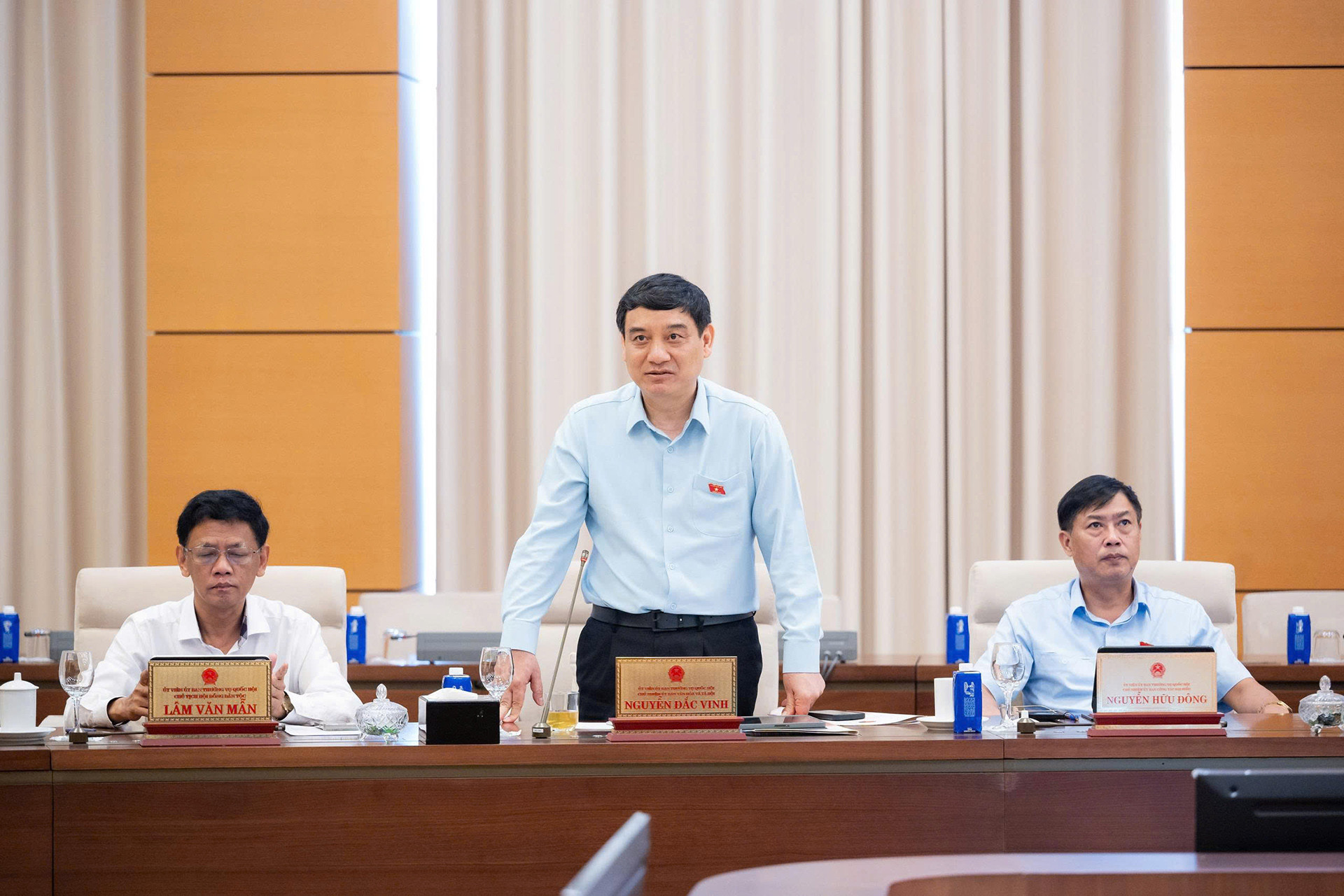
The crises reignited debates over the “one exam, two objectives” model, following a proposal by the Chair of the Committee for Culture and Education, Nguyen Dac Vinh, to study the separation of the high school graduation exam and university admissions
Vinh assessed them as “very serious.” He raised two perspectives that need careful study to find solutions
First, organizing a “two-in-one” exam has the benefit of saving effort for citizens and reducing financial costs for society, but it also presents drawbacks in other aspects
“In the high school graduation exam, there is a strong motivation to achieve higher results to be admitted to universities. This is also one of the causes leading to negative practices in the exam. We are considering whether we should study separating them into two independent exams,” Vinh said
Accordingly, the high school graduation exam would aim to evaluate the general education process, testing basic knowledge and classifying students, using that score distribution to assess the training quality of educational institutions. Meanwhile, university admission should be an independent task managed by higher education institutions themselves
In reality, several universities have already shifted to competency-based assessments and independent admissions. “Ifwe make a clear separation, the high school graduation exam will probably have a much lower risk of repeating the issues we see today,” Vinh stated
Second is the issue of testing with the multiple-choice method. According to Vinh, if both the high school graduation and university admission processes rely purely on multiple-choice testing, especially for Mathematics, this needs to be re-evaluated
He said that teachers not only provide knowledge but also offer practice to students with methods of presentation to demonstrate clear, logical thinking. If only multiple-choice testing is used, students merely tick the correct option.
He noted that although each student receives a different multiple-choice test version, tampering with these answer sheets is far easier compared to essay-based papers
Referencing international experience, Vinh said that exams typically allocate 70 percent to multiple-choice and 30 percent to essay questions to develop student capacity and help them practice multiple skills
Under the proposal, the scale of the high school graduation exam could be lighter; for instance, students completing the twelfth grade would take a test or exam and use those scores for graduation approval, overseen by each local authority
The proposal has been applauded by many education experts, who believe that using the high school graduation exam results for university admissions is also a cause of negative practices or arising inadequacies during the examination
Le Huyen
-
educational reforms
-
high school graduation exam
-
educational news
Hot news

Need help choosing the right university or study destination?
Start your FREE JIUniversity Admission Assessment today and discover the best international study pathway for your academic goals.
Source: vietnamnet.vn
Tag:autonomy, Debate, Fraud, institutional, shocks