
Europe’s research breakthroughs face a technology transfer bottleneck
Share by Linkedin
Share by Reddit
Share by Facebook
Share by Bluesky
Share by X
Share by Mastodon
Share by Xing
Share by email
Loading…
Print
APU sim – Automatic Preparation Unit
<img src="https://ji<a href="https://jiuniversity.com/a-bad-omen-syria-bans-women-from-university-courses/” title=”A bad omen? Syria bans women from university courses”>university.com/wp-content/uploads/2026/10/img-aox-0001-pic-3_baiHSzFXT.jpg” alt=”APU sim – Automatic Preparation Unit”>
Unprecedented Resolution: New Single Particle Optical Counter for Nanoparticles and Microparticles

Your Entire C/N/S/X Lab in One Device

Europe is a powerhouse of world-class research, but its ability to turn that excellence into technologies and companies is increasingly important for competitiveness. technology transfer offices (TTOs) help researchers identify and protect inventions and connect them with companies, investors and entrepreneurs. A new EPO study, developed with ASTP – Europe’s association for technology-transfer professionals – and Fraunhofer ISI, provides the first Europe-wide benchmark by combining patent evidence with survey data from more than 800 European TTOs.
“Technology transfer is a competitiveness issue. Europe’s universities and public research organisations are at the forefront of scientific discovery, but breakthroughs must move from the lab to the market if they are to create jobs, growth and strategic autonomy,” said EPO President António Campinos. “This means strengthening technology transfer, improving access to finance and building a more integrated single market for innovation. The study presented today identifies six priorities to help Europe turn research excellence into market success.”
European TTOs vary widely in size, maturity and activity
Of the 809 TTOs analysed, 90.5% were small or mid-scale, while 9.5% were large-scale offices. Large-scale TTOs have six times more staff, support institutions with 23 times more research expenditure and nearly seven times the research workforce and receive almost 16 times more invention disclosures than small or mid-scale offices

Start-up boom thriving
In 2024, 37 new spin-offs were founded at ETH Zurich, a large proportion of them in the fields of AI and biotechnology
Read news
Once an invention has entered the TTO pipeline, small and mid-scale offices can help it progress towards a patent, licence or venture at rates comparable to larger offices. The difference is one of capacity: larger offices can process substantially more activity per staff member because they benefit from specialist expertise, established processes and stronger commercial networks
Connecting research, expertise and investors across Europe
The study suggests that local TTOs can strengthen their capacity by drawing on wider expertise, finance and market networks. Most offices are too small to maintain every capability in-house. The data support a model in which close contact with researchers remains local, while specialist market knowledge, technology intelligence, training and investor access are shared through regional and European support structures.
The data also highlight the growing pan-European dimension of technology transfer. Research-based technologies are emerging from a wider range of countries, while the companies, investors and entrepreneurs best placed to develop them may be located elsewhere in Europe. Greater visibility, brokerage and cross-border connections can help promising inventions find the right partners and address the still-limited scale of cross-border technology transfer.
Europe has caught up on university ownership, but a gap remains
Patents with university involvement account for around 9% of European patents, close to the US level. European universities also own a much larger share of their inventions than twenty years ago. However, 40.7% of European patents directly owned by European universities lapse within ten years, compared with 26.3% of those owned by US universities, pointing to challenges in sustaining and commercialising promising technologies. As competition intensifies, notably with China’s renewed focus on university technology commercialisation in its 15th Five-Year Plan, Europe needs stronger technology transfer support to help research reach the market.
Public research is increasingly important in strategic technologies
European patent applications involving a university, public research organisation or research hospital have more than doubled in the past two decades, from around 3 200 in 2006 to almost 8 000 in 2025. Germany, France and the United Kingdom remain the leading countries, but their combined share fell from nearly 64% to about 55%. Rather than a decline among leading countries, this indicates a broader European research base, with particularly strong growth in the Netherlands and Spain and increased activity across many others.
Research institutions were applicants on about 34% of European-origin biotechnology applications, 29% in quantum technologies and 26% in pharmaceuticals in 2025. Their ability to move inventions towards the market is therefore strategically important. The leading European public research institutions are CNRS (France), Fraunhofer-Gesellschaft (Germany), CEA (France), Inserm (France) and imec (Belgium).
New tools to explore Europe’s public research landscape
Alongside the report, the EPO is launching a Data Desk dashboard on European public research, enabling users to explore patenting activity by country, institution and technology. The EPO’s Deep Tech Finder (DTF) has also been expanded with additional data on European public research organisations, further supporting connections between research institutions, industry and investors.
https://www.chemeurope.com/en/news/1190155/europes-research-breakthroughs-face-a-technology-transfer-bottleneck.html
Advertisement
Automated and Done in 5 Minutes – That’s How Solvent Extraction Works These Days

Advanced carbon & sulfur analysis of metals and inorganic materials

NOx and NH3 measurement: Efficient solutions for precise and user-friendly gas analysis

Other news from the department science

Archimedes’ screw made from a single molecule
Global underground CO₂ storage hits record 43.6 million tonnes
London Register expands reach
<img src="https://jiuniversity.com/wp-content/uploads/2026/10/6adf2e0d15593_BMD_ehe7A.jpg" alt="Hanbat National University study shows cation disorder could improve lithium-rich cathodes”>
Hanbat National University study shows cation disorder could improve lithium-rich cathodes
Experiments show a disordered structure enhances lithium transport while preventing performance degradation
Making the sustainable production of hydrogen peroxide more efficient
A research team has found an optimized way to produce hydrogen peroxide more sustainably

2026 KlarText Prize for Science Communication: Klaus Tschira Foundation Honors Seven Researchers
Articles such as “Good News for Those Who Hate Brussels Sprouts,” “The Stamp-Sized Lab,” and “Faster Drug Development Through Math” won over the jury
A molecular strategy for longer-lasting, dendrite-free zinc batteries

New method makes acrylic glass recycling economically
Industry could adopt the method immediately
New biobatteries are inspired by your small intestine
Binghamton University team shows how wastewater can power bacteria fuel cells
Electrolysis for Green Hydrogen: Research and Patents Are on the Rise, but Market Ramp-Up Remains Challenging
Germany and the EU Significantly Increase Research Funding for Electrolysis Technologies
University of Limerick researchers turn wood industry byproduct into high-performance battery material
New research could help power next generation of greener batteries
New ‘hunter-killer’ chemistry captures and destroys forever chemicals
New catalytic membrane targets the strongest bond in organic chemistry

Using AI to Recall Forgotten Chemistry Knowledge
New data on substances and reactions from before 1800 help us better understand the development of chemistry
Converting CO₂ Directly into Fuels and Chemicals
TU Berlin Launches Two Research Projects on Direct Electrochemical CO₂ Conversion

Overcoming the scaling challenge for climate solutions
Launch of Climate Solutions Hub within the ETH Domain
Robust enzymes
It’s not the size that counts: chemical proximity protects metabolic enzymes from heat stress

Fine particles from aircraft exhaust become more harmful over time

Bright crystals: Moving chalcogenide materials closer to application
First experimental measurement of the luminous efficiency of chalcogenide perovskites: the materials emit light much more efficiently than previously thought
Saving Platinum in Hydrogen Production
TU Wien demonstrates how up to 88 per cent of the platinum used in hydrogen electrolysers can be saved
Battery manufacturing and recycling could go green with this ‘glue’
No more fluorine or toxic solvents
One Molecule, Many Signals: How Researchers Distinguish Between Stimuli
Which excitation process corresponds to which measurement signal?
More from the department science
Most read news

Rapeseed oil instead of crude oil: Verbio starts industrial production of renewable chemicals
Nearly EUR 100 million invested

Two chemical giants, a potential deal: BASF and Evonik in talks
BASF confirms exploratory talks regarding potential takeover of Evonik

How chemistry chooses a mirror-image form: the 2026 Nobel Prize in Chemistry for asymmetric synthesis
The Nobel Prize goes to Kagan and Soai for their discovery of homochirality

AkzoNobel and Axalta to be called Axanzo following merger
Greg Poux-Guillaume becomes CEO
Microplastics Cause Fatty Liver Disease in Mice

Evonik is cutting 3,200 jobs worldwide and sharpens growth strategy
Businesses and German sites with clear roles

EWE and VERBUND Establish a Joint Venture for One of Europe’s Largest Hydrogen Projects
European Partnership for Energy Security and Decarbonization
Enzymes Overcome the 100-Degree Heat Barrier
The process is of interest to the chemical industry
Green hydrogen from seawater
Electrolysis with Untreated Seawater: Fraunhofer Tests Materials and Membranes
LEVACO Chemicals Acquires LANXESS’s Tank Farm and Strengthens Its Leverkusen Site
LEVACO Enhances Autonomy in Key Raw Material Processes

Leuna Polyamid: Insolvency Proceedings Initiated
Insolvency estate is insufficient to cover decommissioning and dismantling
Enzymes in Beads for a More Sustainable Chemistry
KIT Files a Patent Application for the Process
More news from our other portals
A blood test can detect over 50 types of cancer
“We’re at a watershed moment”

Arla is investing more than 63 million euros in the future of high-protein dairy products
Demand for skyr, cottage cheese, and protein solutions is driving investment in Europe

Two new bioinformatics tools improve the diagnosis of genetic disorders
AI algorithm detects pathogenic structural variants in the genome more reliably

A first in Germany: Charité successfully treats 19-year-old with CRISPR therapy
Exagamglogene Autotemcel used for the first time in Germany following approval

75 percent of Gen Z buy protein products—social media is driving the trend among Gen Z
A SINUS study shows that eight out of ten 14- to 28-year-olds consider a balanced diet important. TikTok and Instagram are their main
New Managing Director for Shimadzu Europa GmbH
Jürgen Semmler to retire
BioNTech Founders Launch New Venture
Şahin and Türeci’s new startup in Mainz focuses on mRNA therapies

International FoodTec Award 2027: Winners Announced
21 award winners honored for innovation, sustainability, and efficiency

Genes or environment? Which has the greater influence on who we are?
What’s in our genes: International research team identifies over 1,000 markers linked to human personality
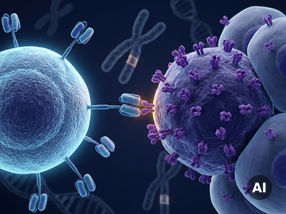
A Matter of Quantity: A Universal Target for CAR-T Cells Against Cancer
“Here, we are demonstrating for the first time an innovative method for identifying new targets for cancer therapies”
Energy Drinks: Consumption Is Rising Among Schoolchildren
DAK Calls for New Warning Labels on Energy Drinks to Protect Minors
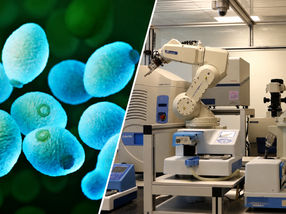
AI scientist autonomously generates and validates new biological discoveries
Researchers at Chalmers University have developed a closed AI laboratory that plans and evaluates experiments with baker’s yeast itself
Microplastics Cause Fatty Liver Disease in Mice

Rising CO₂ Alters Wheat Proteins and Baking Quality
Climate Change Affects Bread

Danaher accelerates life sciences research with new AI-powered autonomous lab
The lab is designed to deliver up to eight times faster progress from idea to validated reagent

Concern over European biotech: the window for change is narrow – and closing fast

AI as a Tool in Flavor Research: De Novo Design of Bitter Peptides
Predicting bitterness in food with precision: AI passes the taste test

Claude discovers a novel enzyme system with CRISPR-like repeats
AI agents discover an unknown enzyme system after 21 hours of autonomous database analysis

Researchers transform old blood cells into young brain cells
60 years younger after 50 days: Study opens a window to a better understanding of cellular rejuvenation processes

Ultra-Processed Foods: The Degree of Processing Affects Metabolism and the Brain
Why Ready-Made Meals Affect the Body Differently Than Freshly Cooked Food
Altmann Analytik Acquires Laboratory Supplier Kobe
Kobe Acquisition Strengthens Altmann Analytik’s Position in the University and Research Market
Stopping stomach cancer before it starts
How the disease-causing process following a Helicobacter Infection can be halted
Ammeraal Beltech to Present Food Conveyor Solutions at EHEDG World Congress
Ammeraal Beltech will participate as a Gold Sponsor at the EHEDG World Congress in Vienna, Austria, on 7–8 October 2026

Molecules Build a Honeycomb
Researchers Decode the Blueprint for Molecular Fibers
Using Enzymes instead of the Landfill: How Biological Processes Can Help with Recycling
Researchers identify enzyme families capable of breaking down polyurethane and polyamide
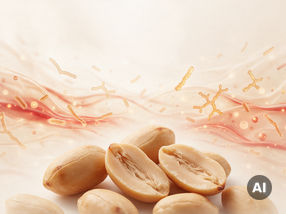
Peanuts leave a unique fingerprint in the blood
Researchers identify a specific fatty acid pattern associated with a lower risk of type 2 diabetes
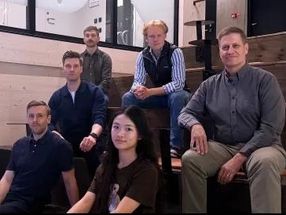
Aventix raises €1.2 million pre-seed to build the future of bioanalytics
AI-powered volume measurement in 30 seconds – contactless
AI-driven microorganism mix has the potential for groundbreaking innovation
Federal Ministry for the Environment Launches First Joint SPRIND Challenge for a Biotech Breakthrough in the Circular Economy

Blue light could cut food poisoning from raw chicken
The low-cost technique is also a

Press Release: Detecting Diseases Through Body Odor?
New Laser Technology Shows Potential for Non-Invasive Diagnostics
Is artificial intelligence revolutionising chemistry?
Discover AI news
More from the department scienceSubscribe to newsletter
Need help choosing the right university or study destination?
Start your FREE JIUniversity Admission Assessment today and discover the best international study pathway for your academic goals.
Source: www.chemeurope.com
Tag:breakthroughs, Europes, face, Research, Technology

You may also like